# Gaussian Mixture Models
"Soft" Clustering Algorithm
Every point is part of every cluster with a percent
# Gaussian Distribution
One Dimension 
μ ± 1σ = 68% data μ ± 2σ = 95% data μ ± 3σ = 99% data
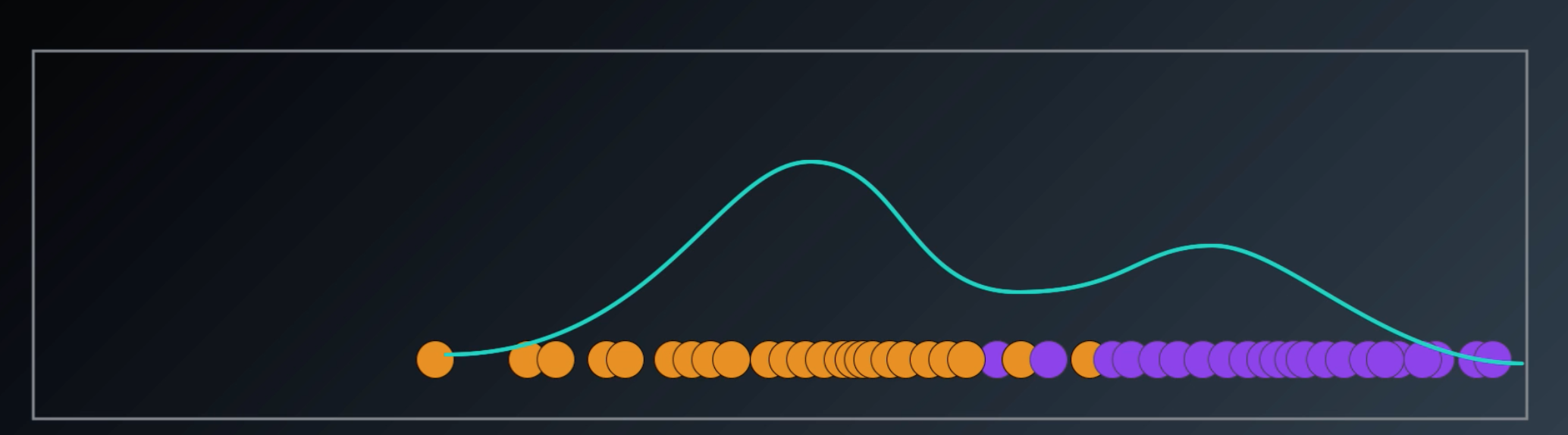
Can be a combination of multiple gaussian distribution
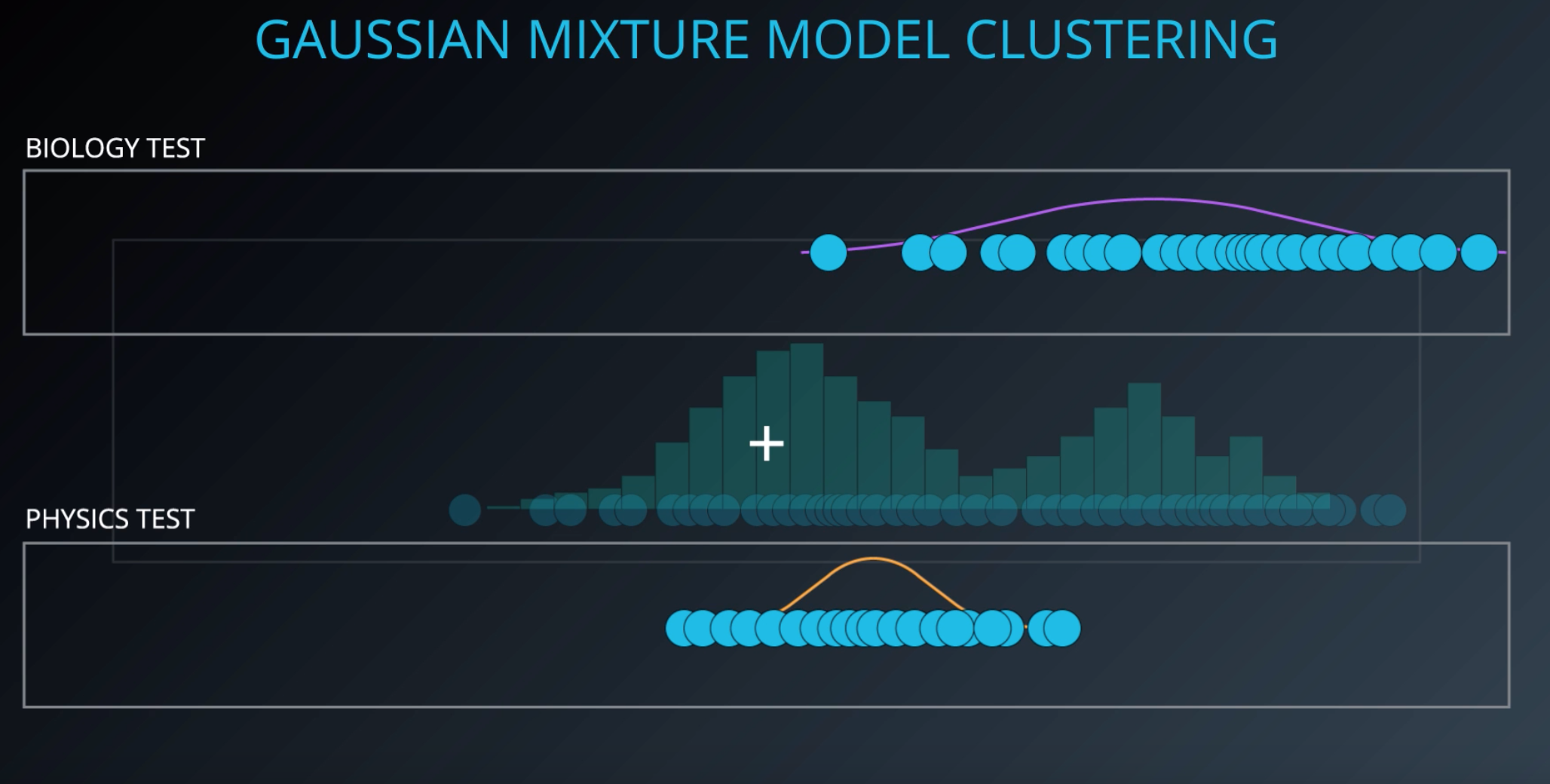
Scikit Learn will find that there is two gaussian
Two Dimension
In the below image, each subject is its own gaussian
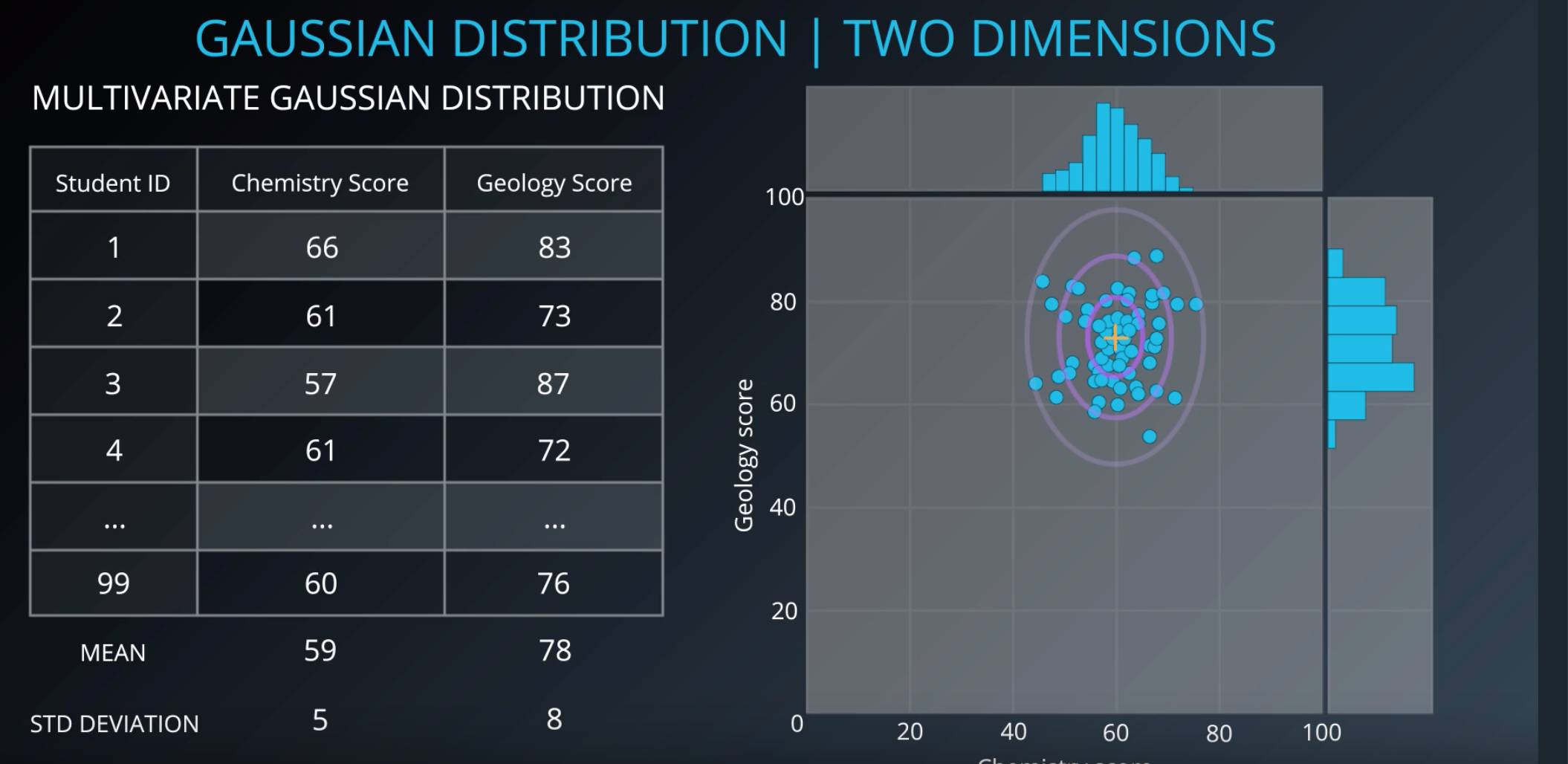
Multiple 2D Gaussian
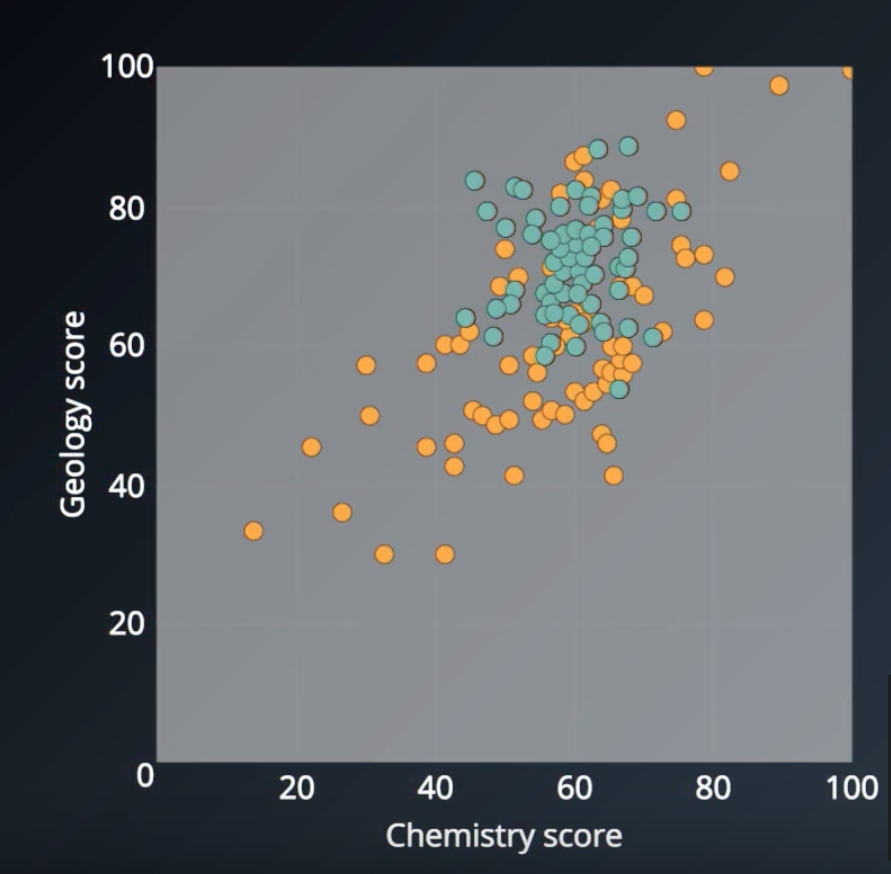
Scores for chemistry/geology for class of 2016 and 2017
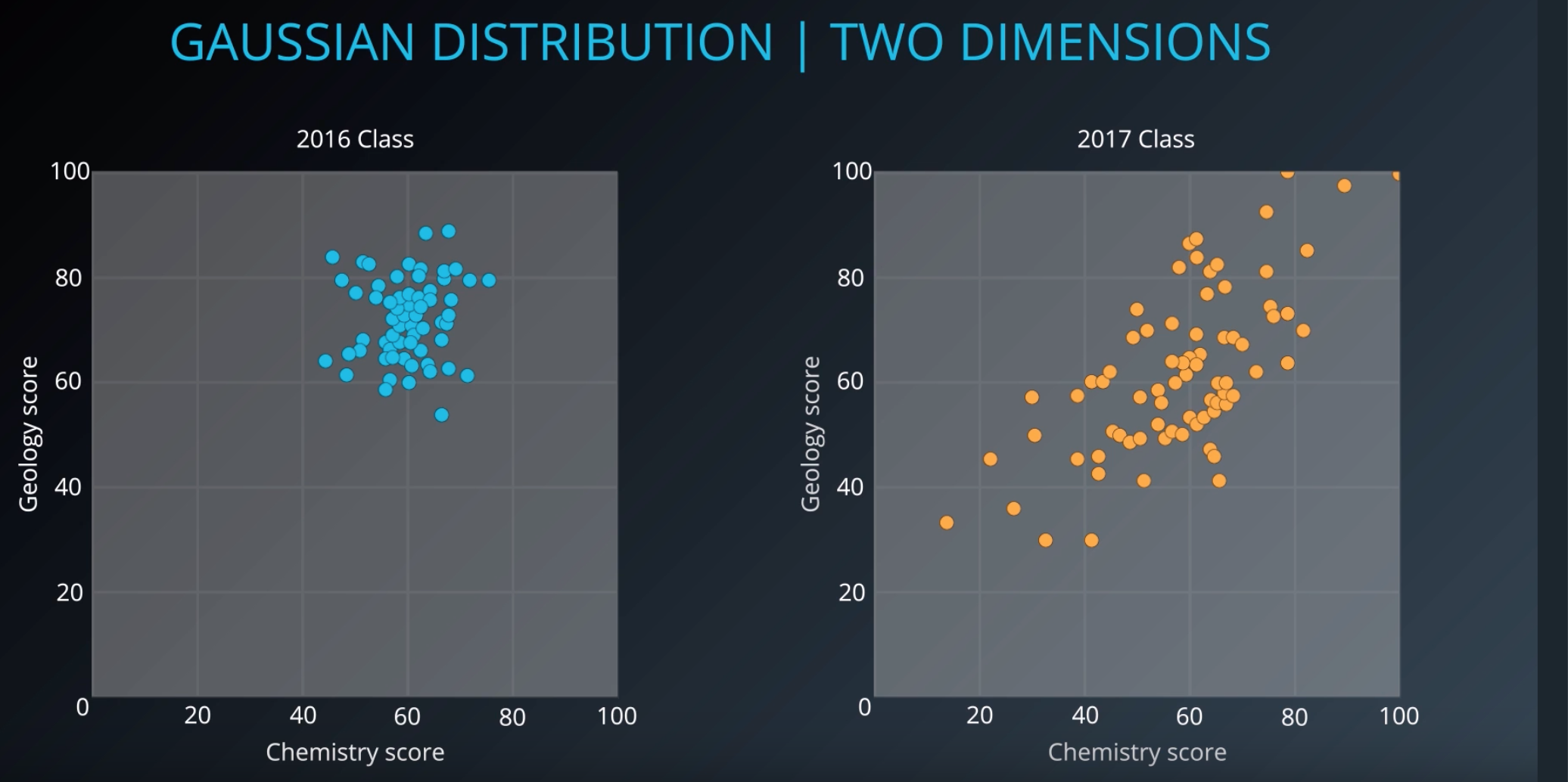
Even if we combine both gaussian mixtures, gmm can separate them
# Expectation Maximization
Steps:
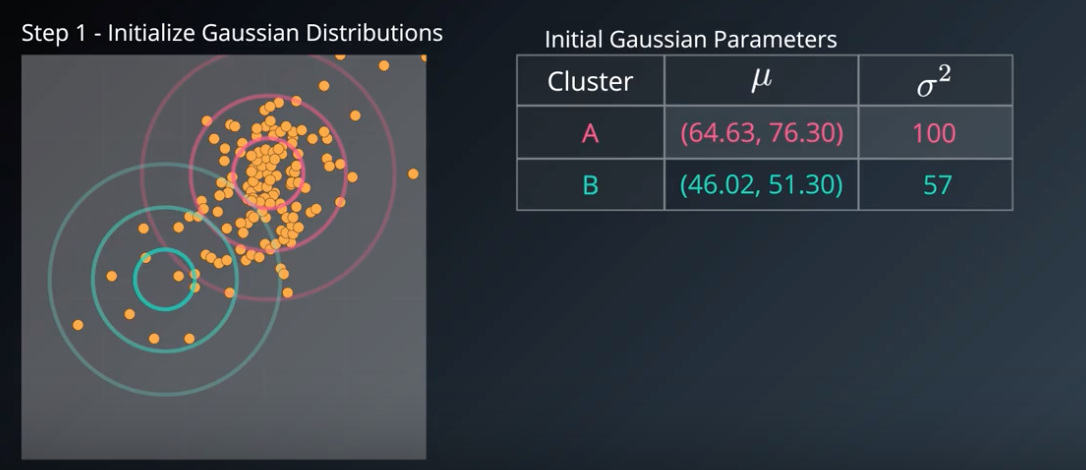
- initialize K Gaussian Distributions
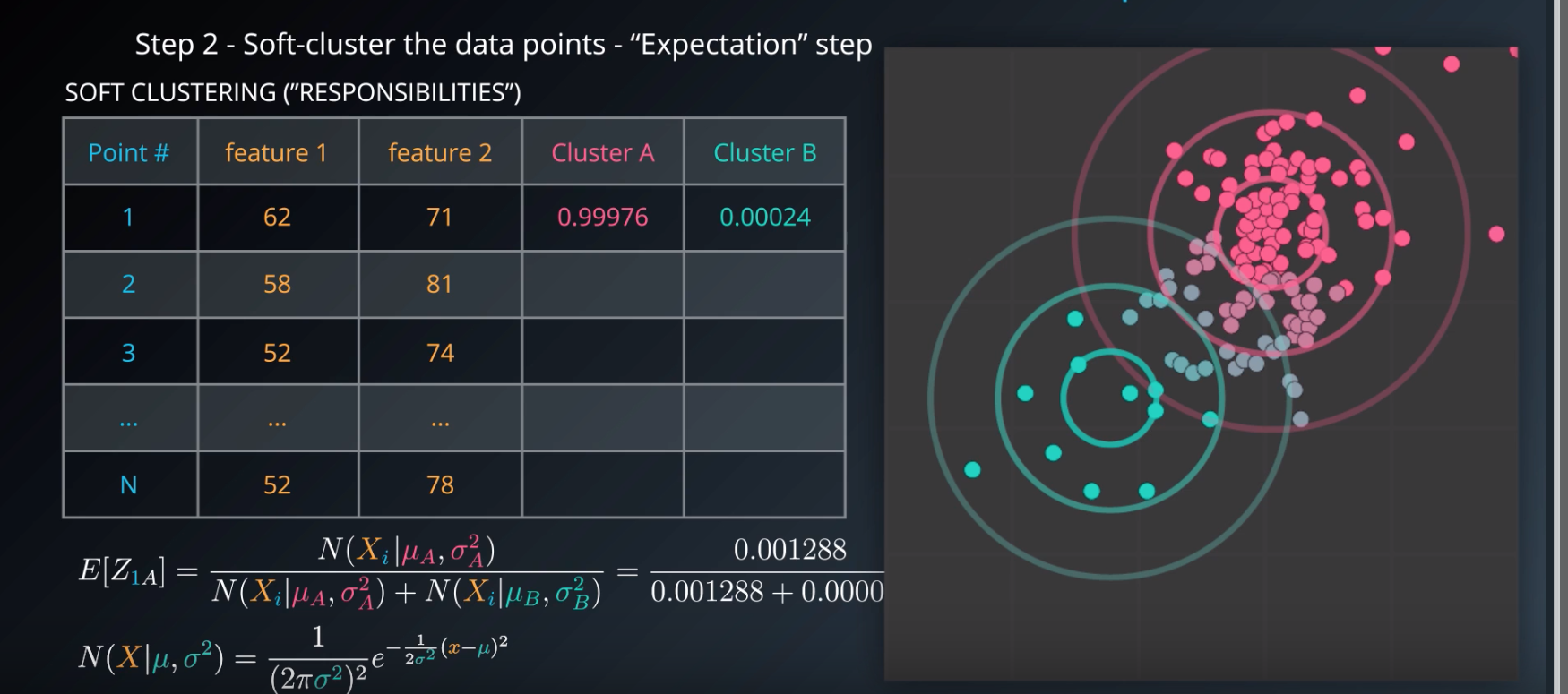
- soft-cluster data "expectation"
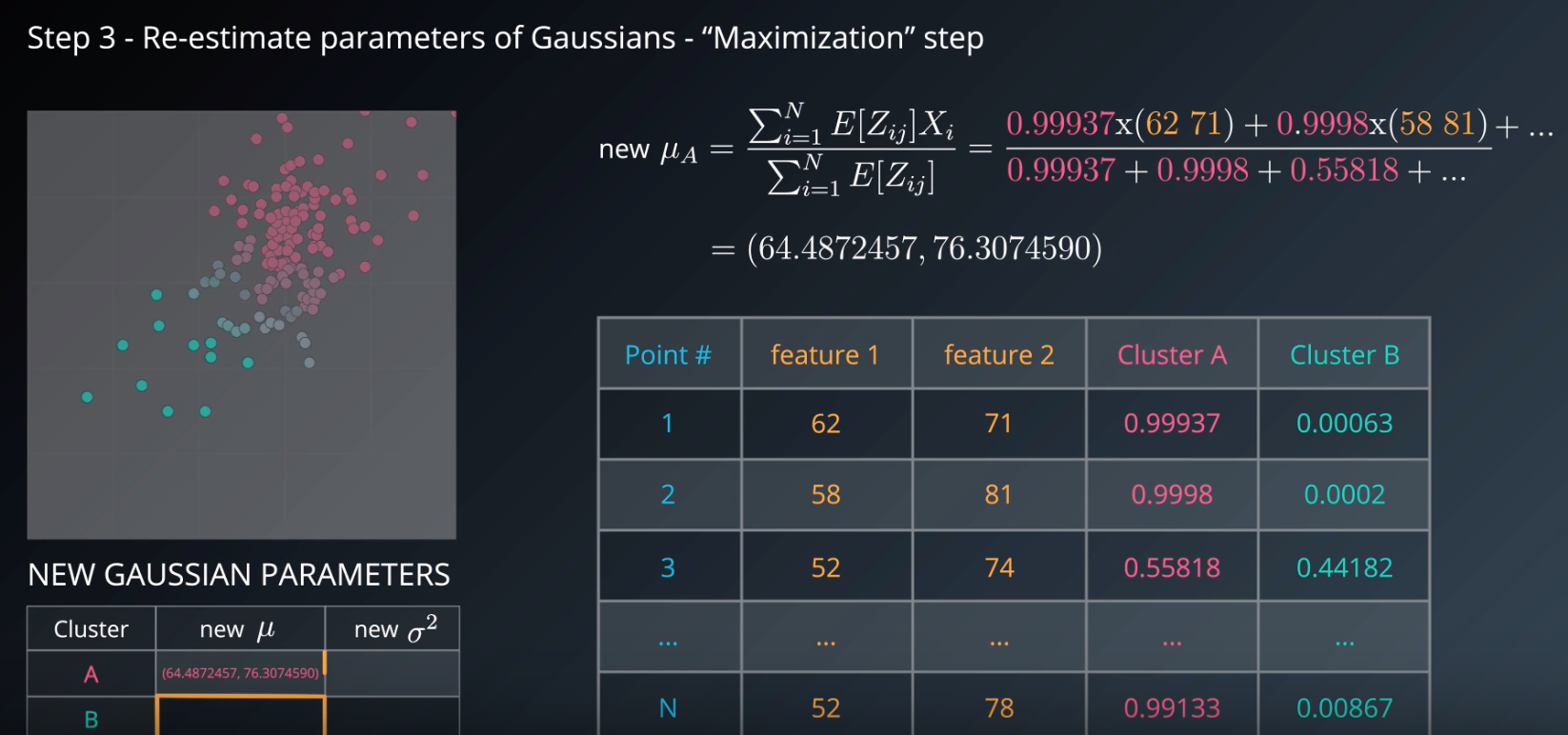
- re-estimate the parameters of the guassians "maximizaion"
- evaluate log likelihood to check for convergence
- Repeat from setp
2until converrged
Step 1
Step 2
Step 3
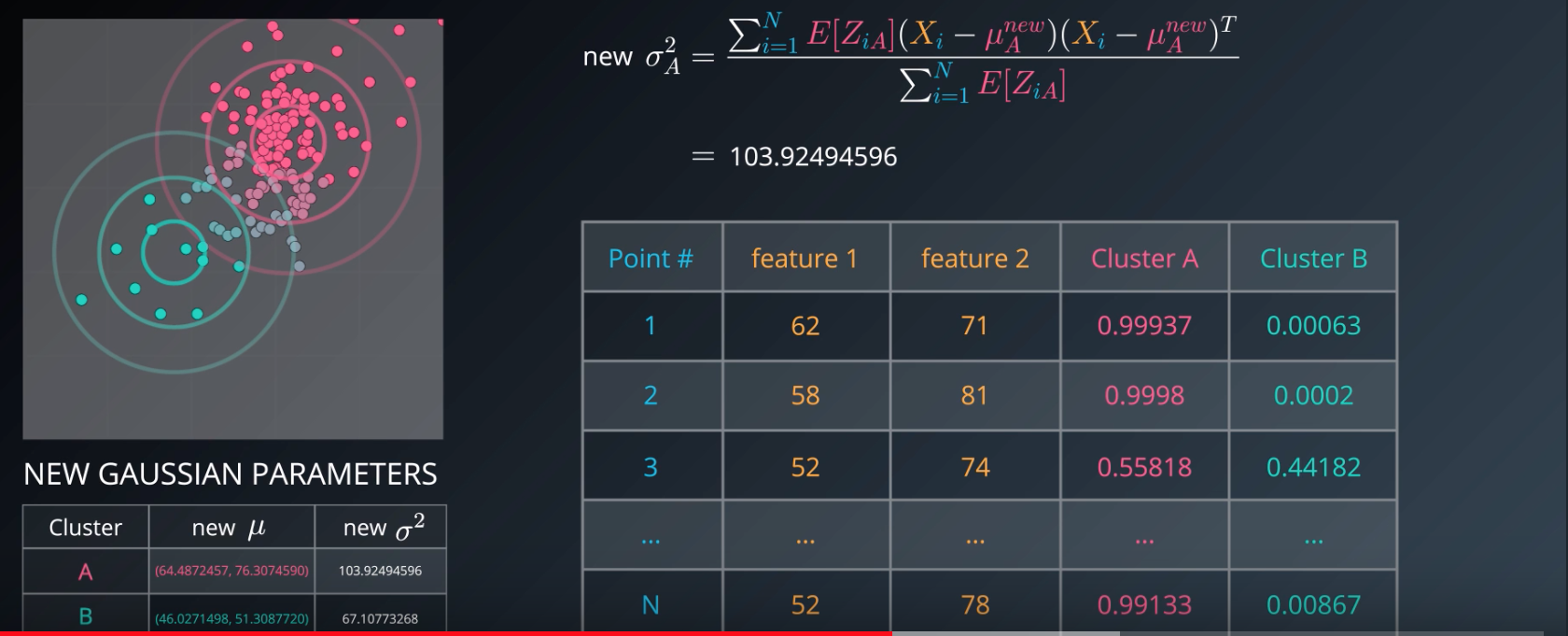
Step 4
higher the number, more sure the mixture model fits the data

# Iterative Steps
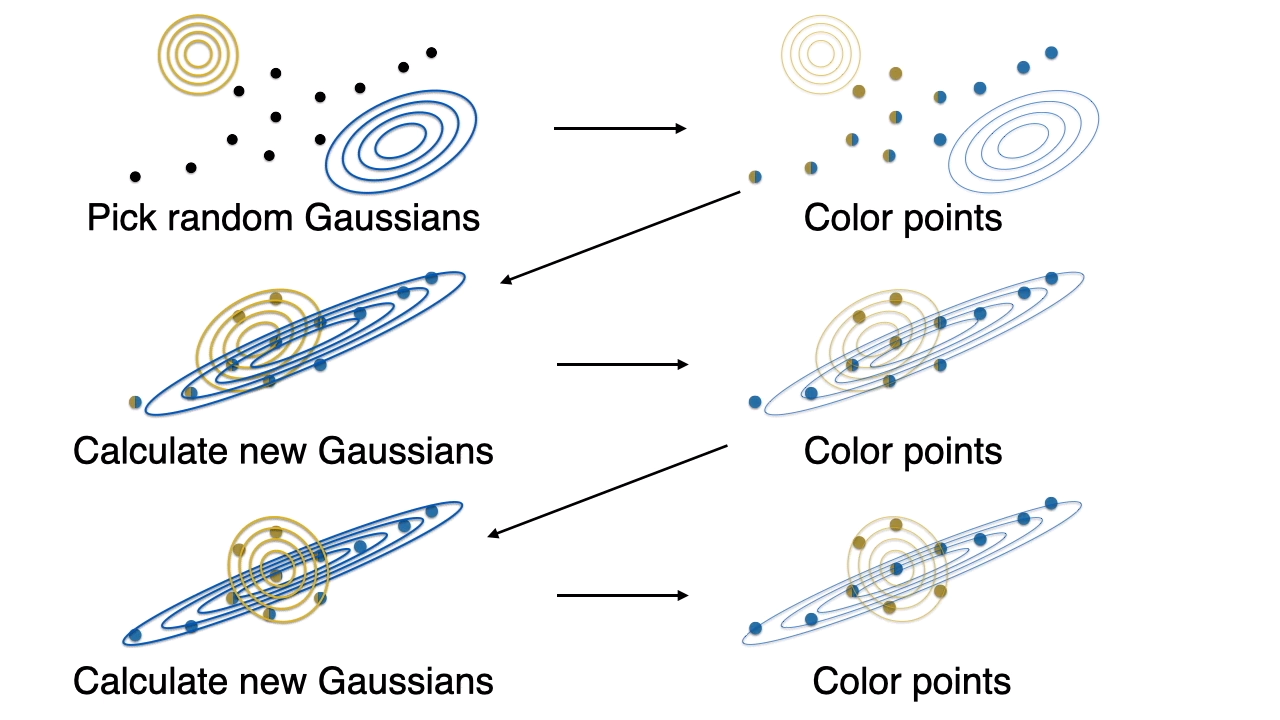
step 0: start with random gaussians
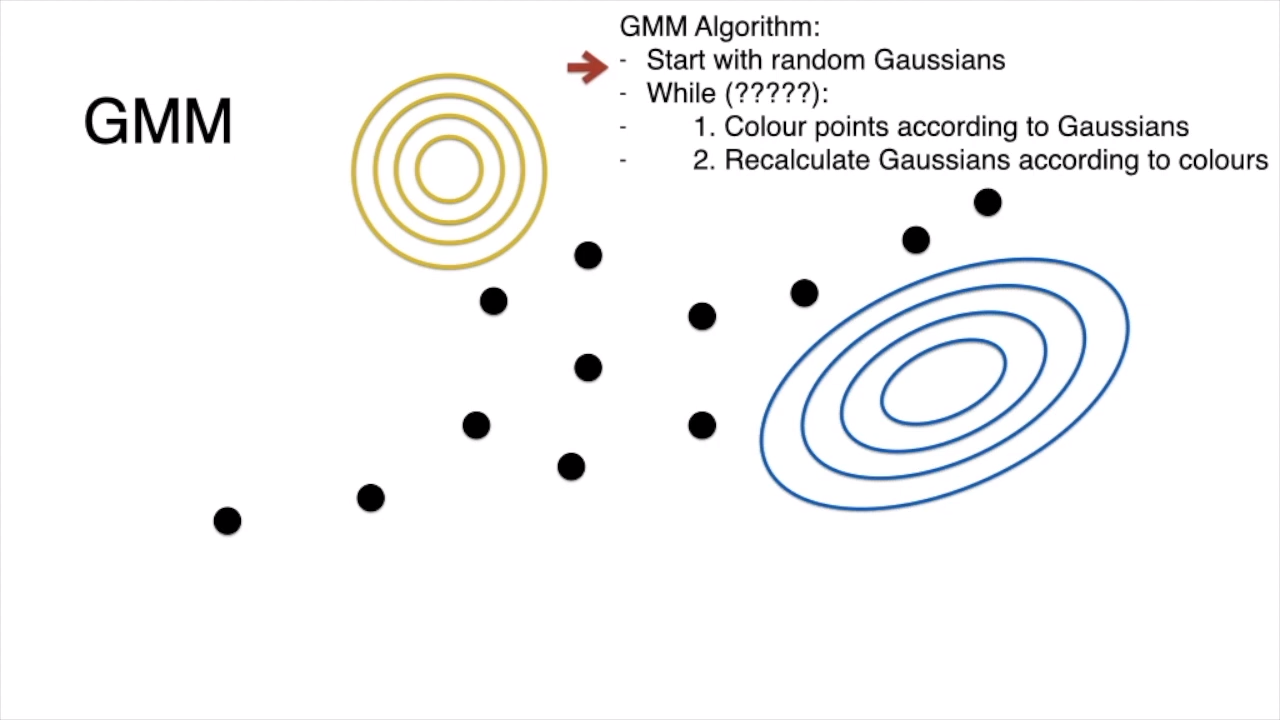
step 1: assign points according to gaussian
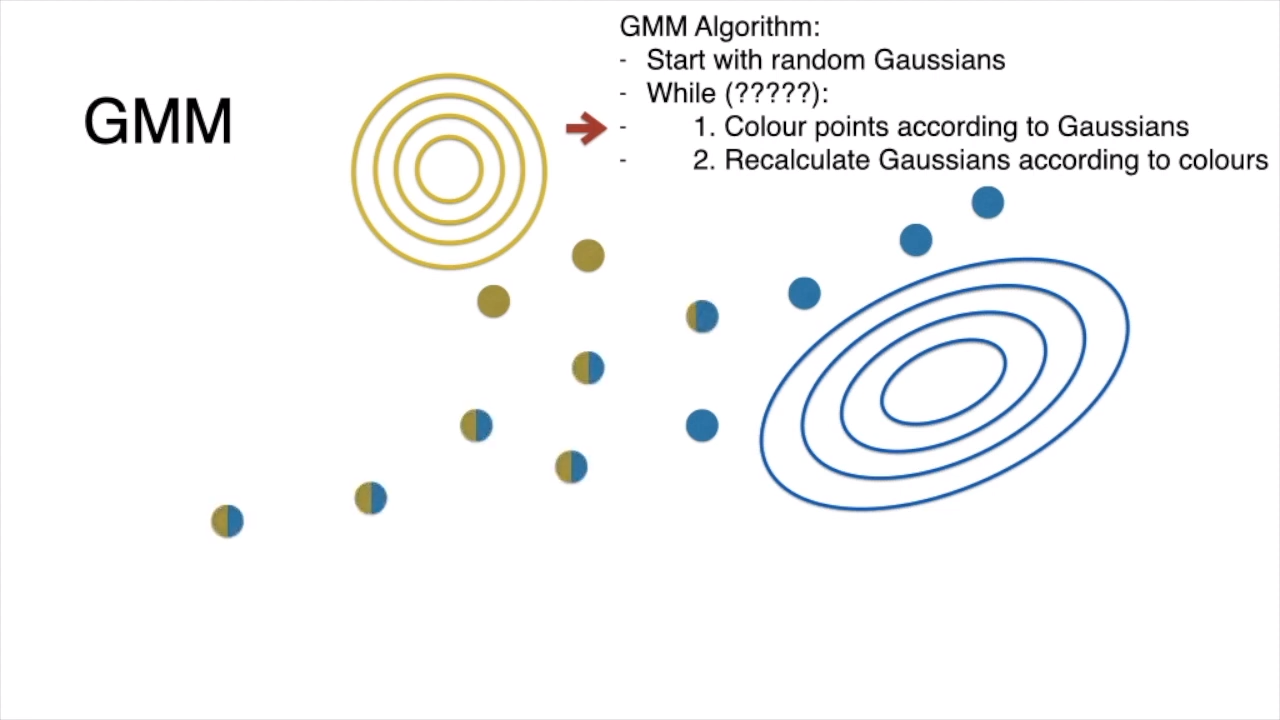
step 2: recalculate gaussian
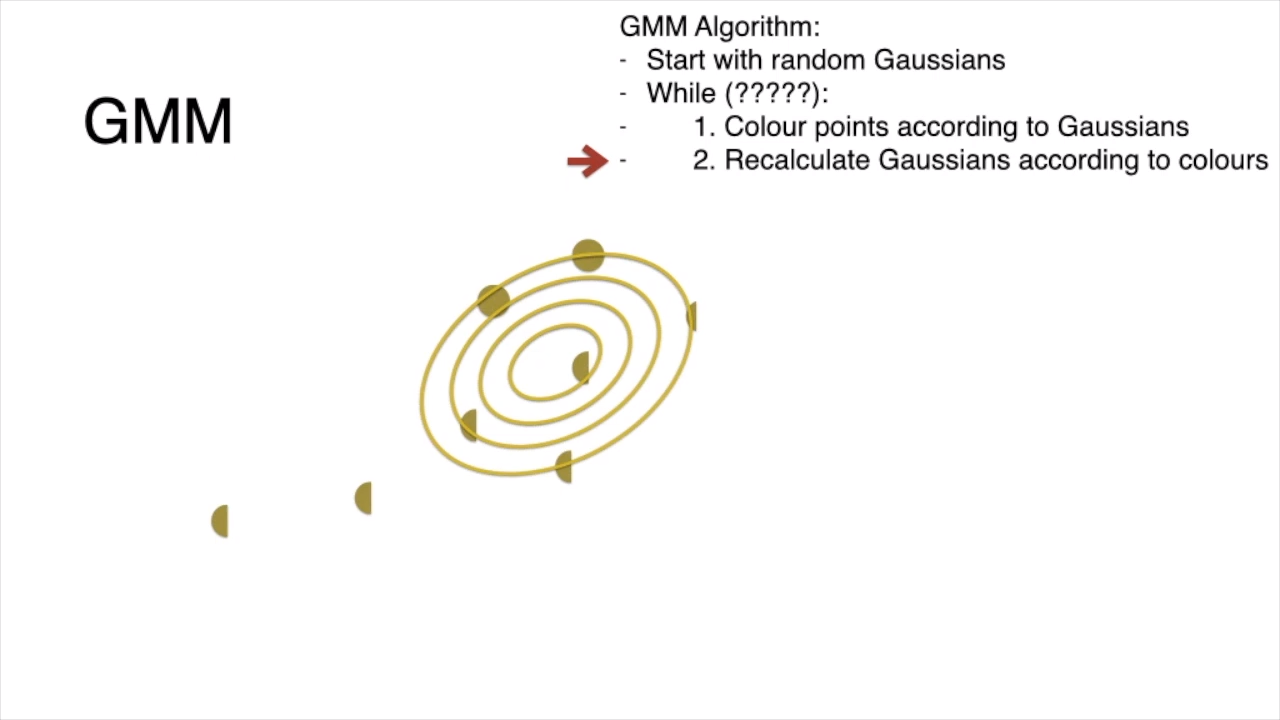
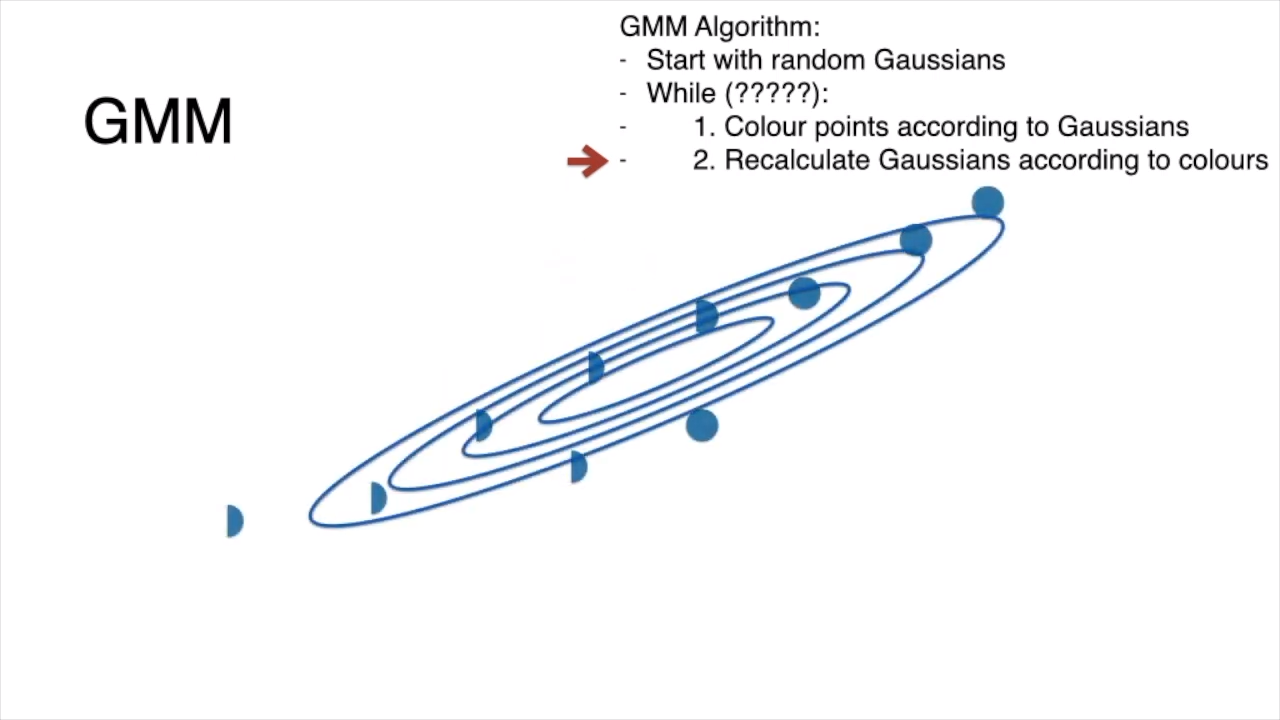
anf then repeat steps 1 and 2 again
All steps visually shown
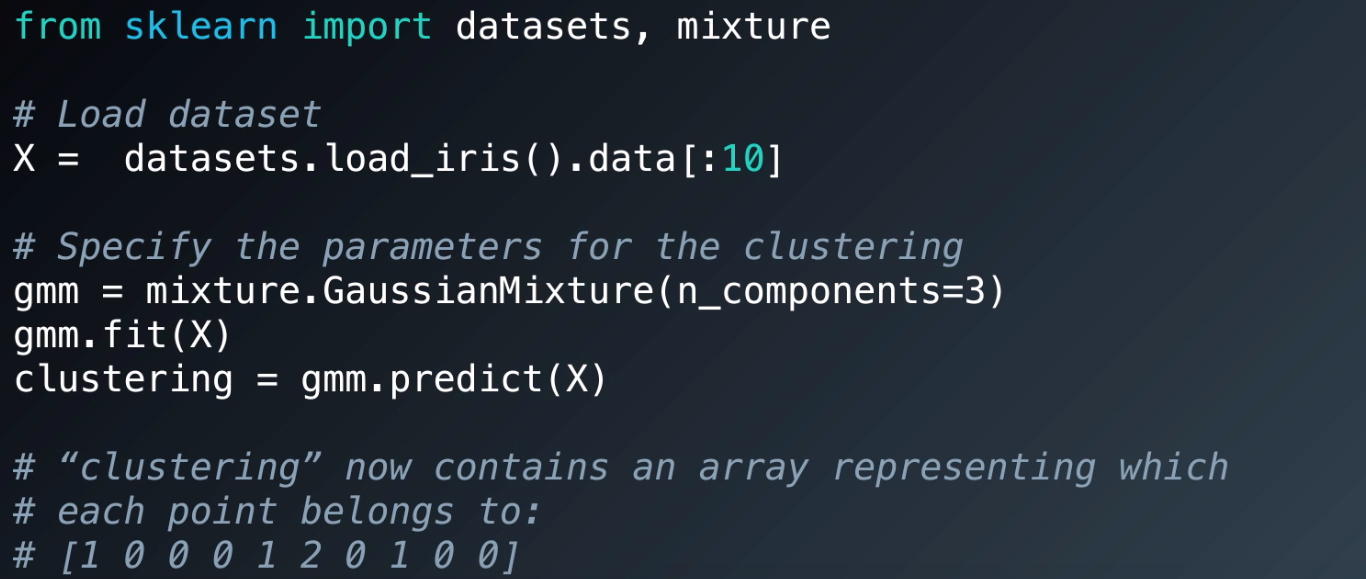
# Implementation
# Pros and Cons
Advantages:
- soft clustering (sample membership of multiple clusters)
- cluster shape flexibility
Disadvantages:
- sensitive to initialization values
- possible to converge to local optimum
- slow convergence rate
# Applications
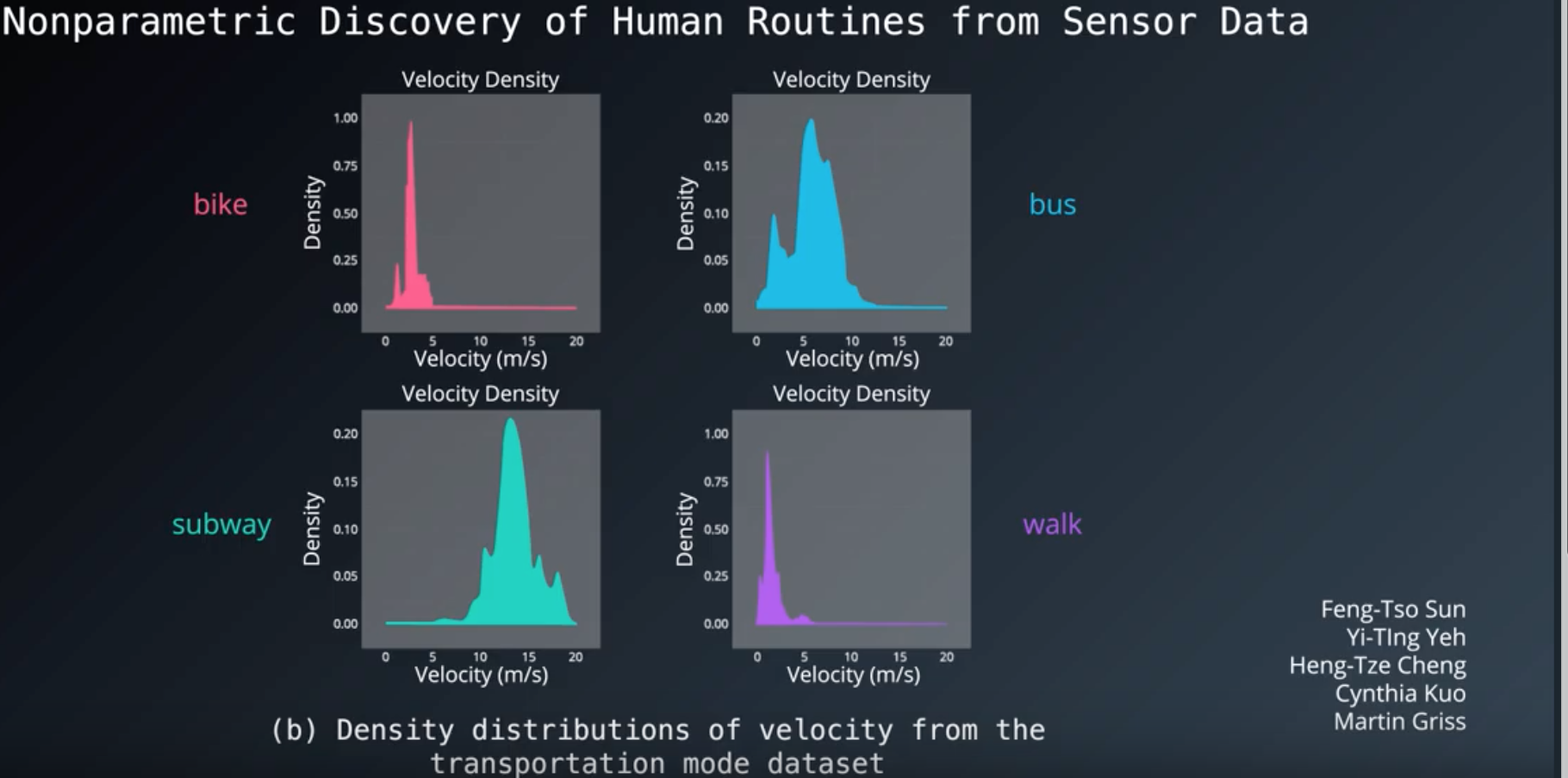
activity recognition from sensor data
background image subtraction
feed streaming video to learn what is background
 Demo (opens new window)
← Kmeans Other Methods →