# Wide and Deep Model
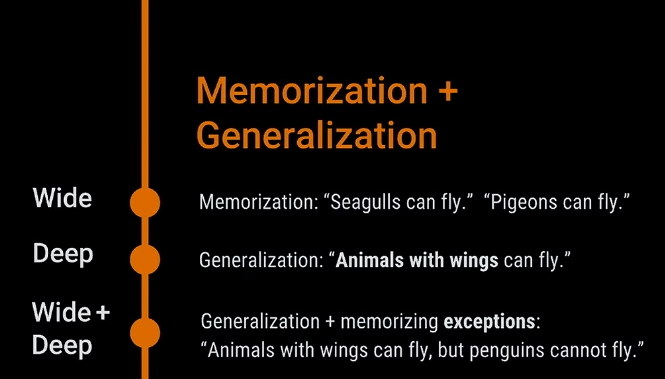
wide vs deep example
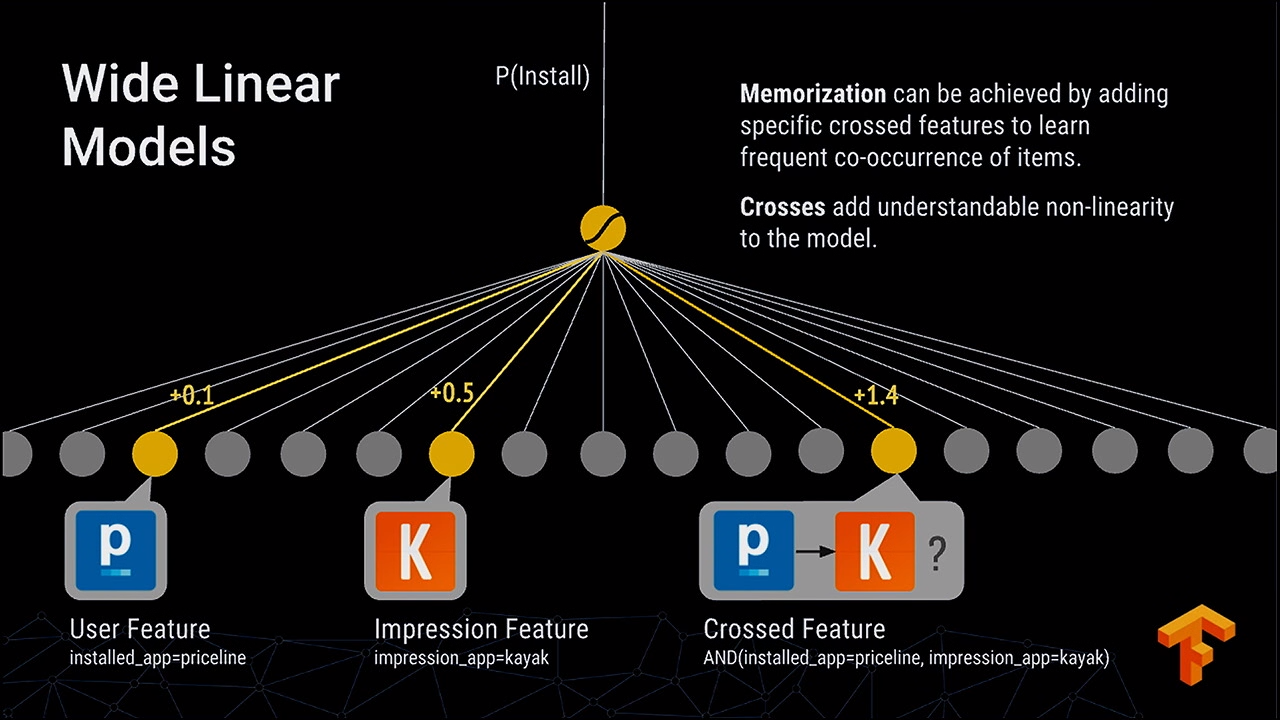
Wide Linear Model
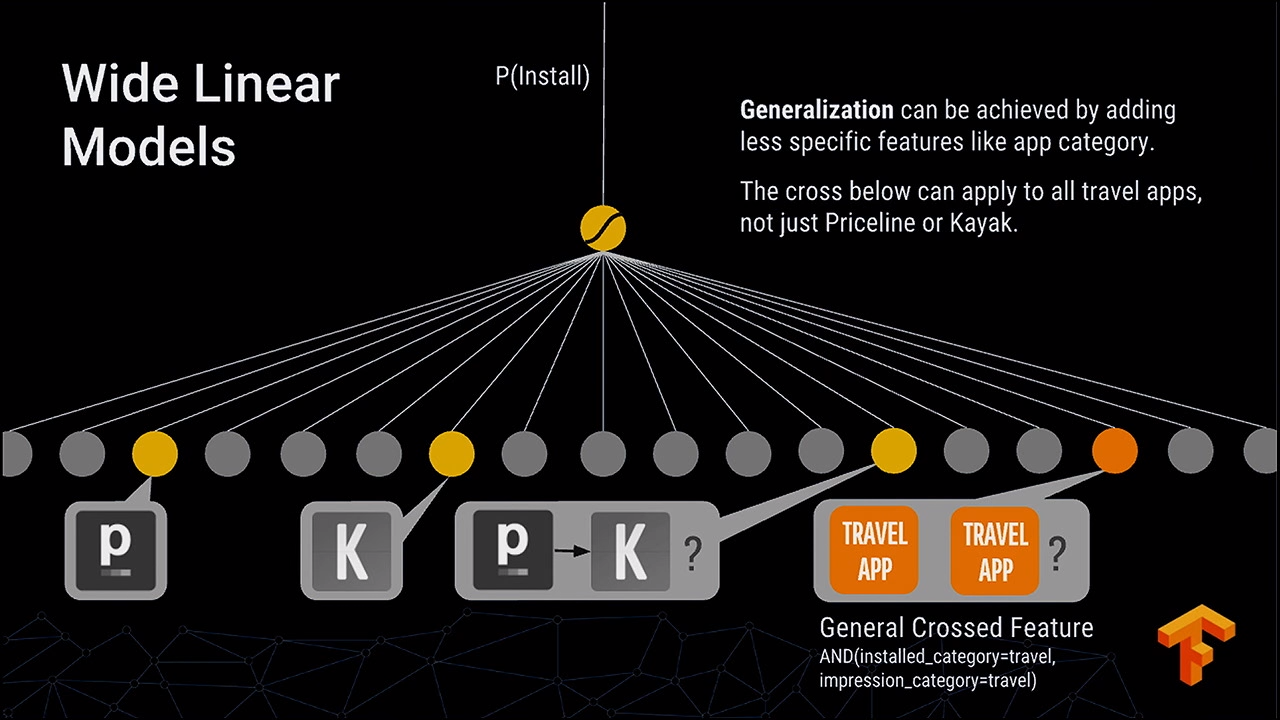
Wide Linear Model generalized
# Features:
wide features: “user_installed_app=netflix”
cross-product transformations over sparse features, such as AND(user_installed_app=netflix, impres- sion_app=pandora”),
Generalization can be added by using features that are less granular, such as AND(user_installed_category=video, impression_category=music), but manual feature engineer- ing is often required.
# Model Architecture
Google Play App Recommendation
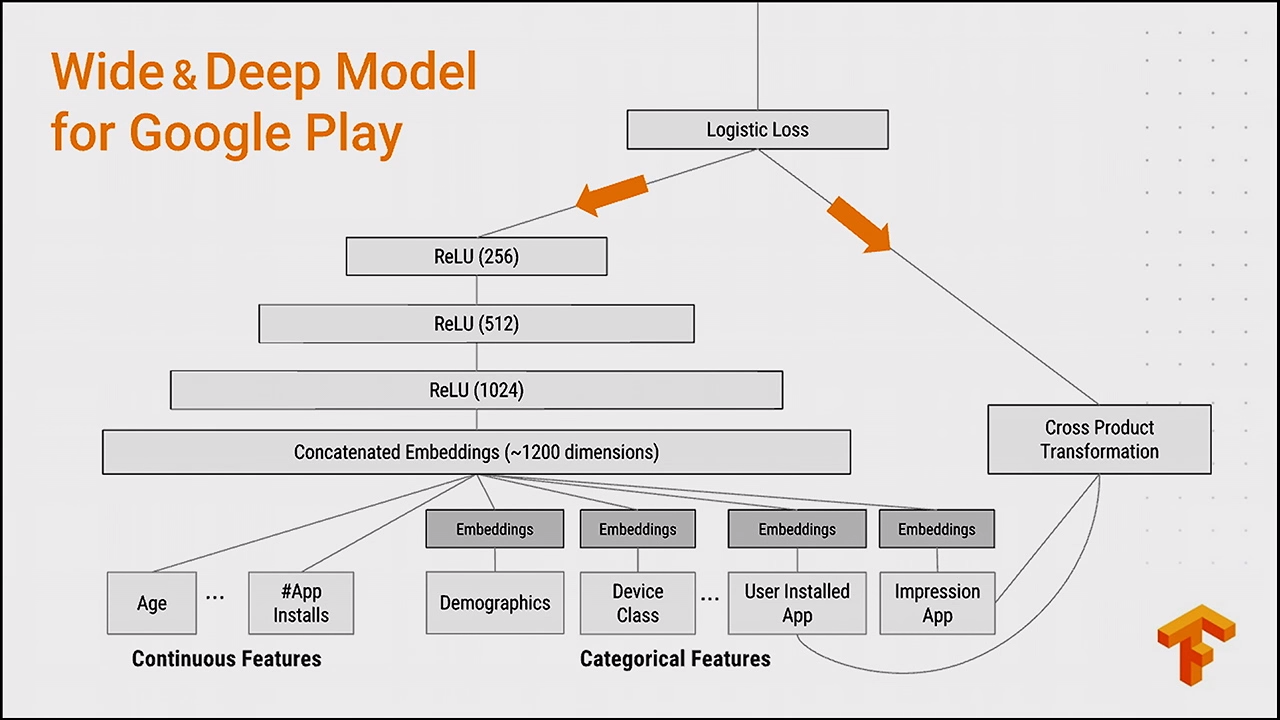
During training, our input layer takes in training data and vocabularies and generate sparse and dense features together with a label.
wide component:
- consists of the cross-product transformation of user installed apps and impression apps.
deep component:
- A 32- dimensional embedding vector is learned for each categorical feature.
- concatenate all the embeddings together with the dense features, resulting in a dense vector of approximately 1200 dimensions.
model: The concatenated vector is then fed into 3 ReLU layers, and finally the logistic output unit.
The Wide & Deep models are trained on over 500 billion examples.
Instead of training frequently from start, we implemented a warm-starting system which initializes a new model with the embeddings and the linear model weights from the previous model.
# Multi Objective
You might need recommender system to optimize multiple objectives.
Etsy optimmizes relevance and revenue.
# Code
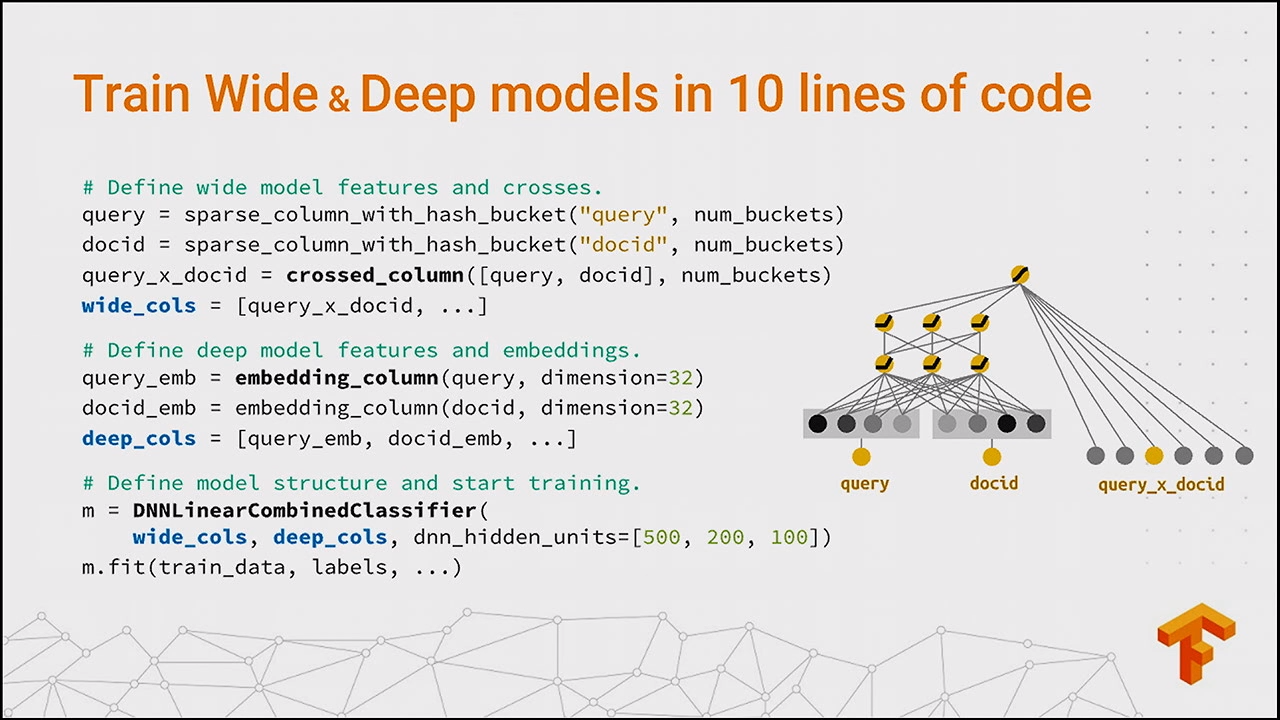
wide vs deep tf code
# results
At peak traffic, our recommender servers score over 10 million apps per second.
wide_deep_google_play_results

# references
Wide & Deep Learning for Recommender Systems paper (opens new window)