# Models
# Candidate Generation
# Collaborative Filtering
User Based
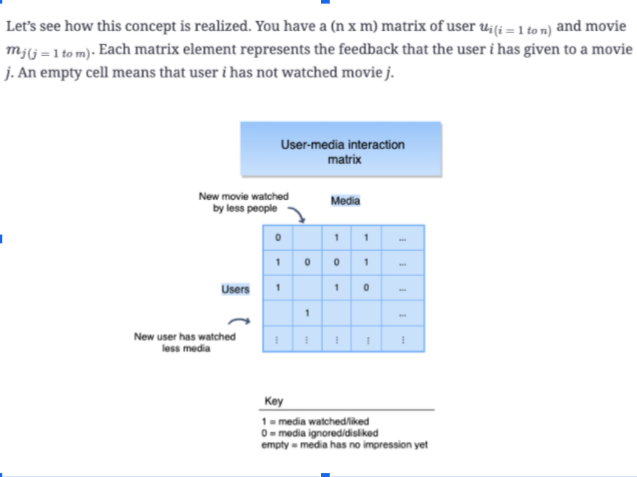
in the below image, 0 (user didn't watch) , -1 (user hated the movie)
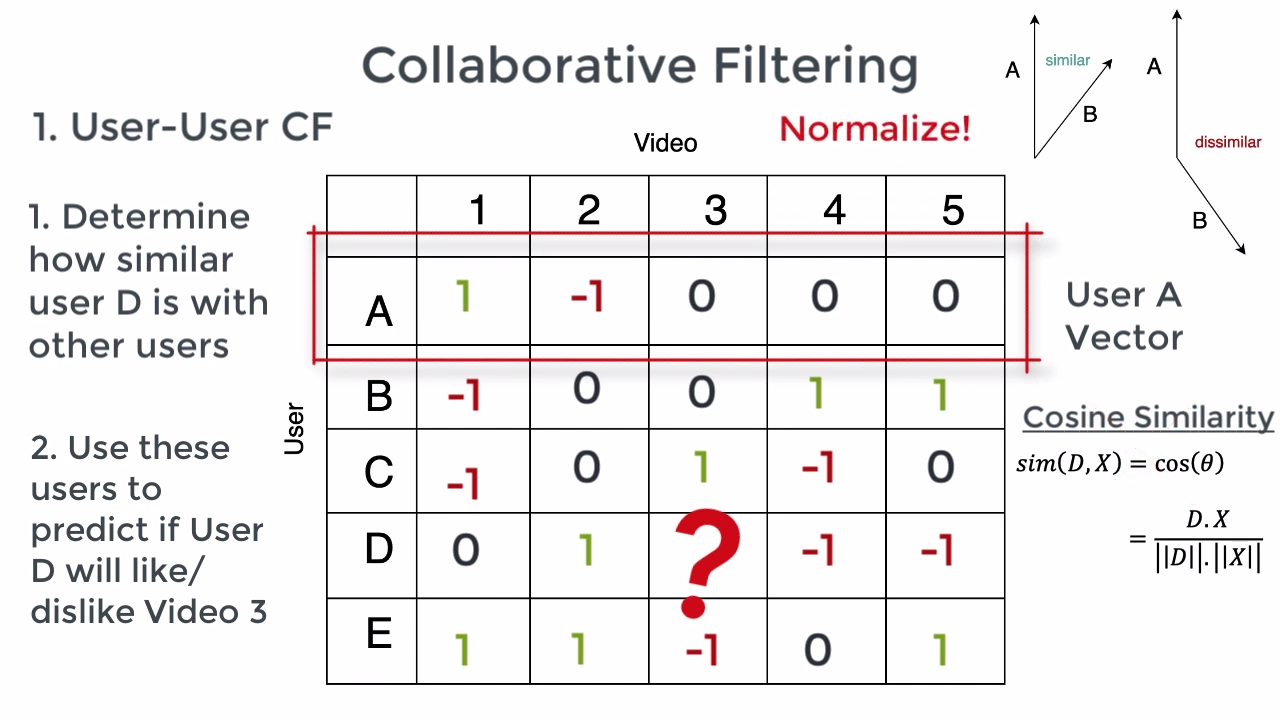
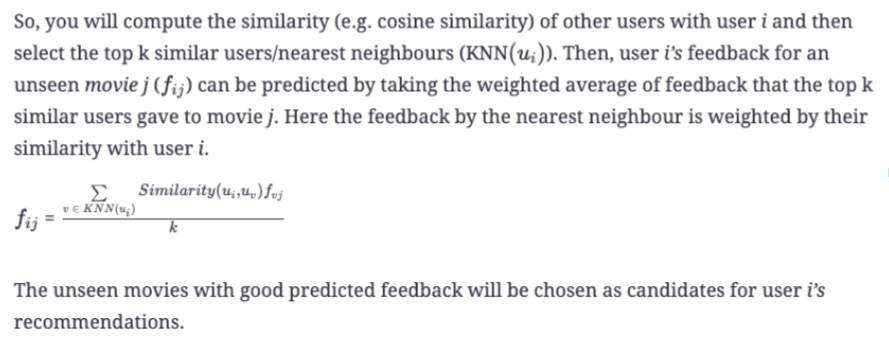
Users might rate the movie differently. So, we subtract rating from average,
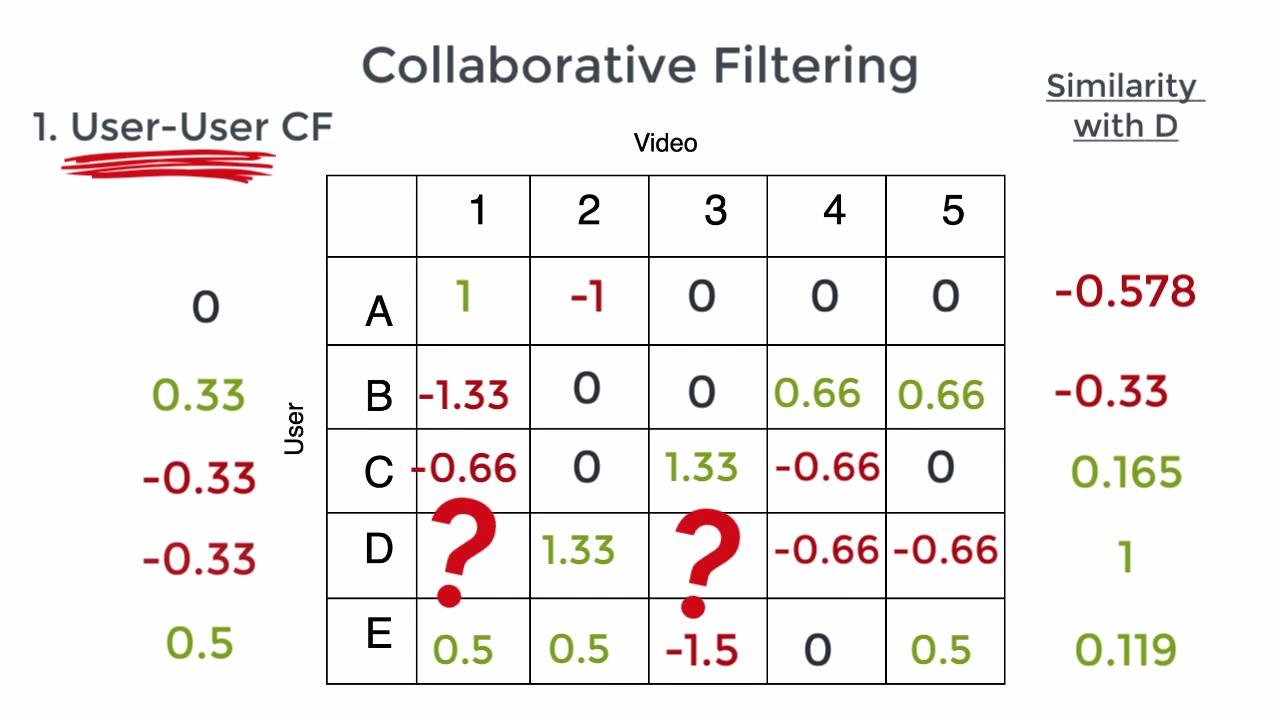
how user D , might like video 3
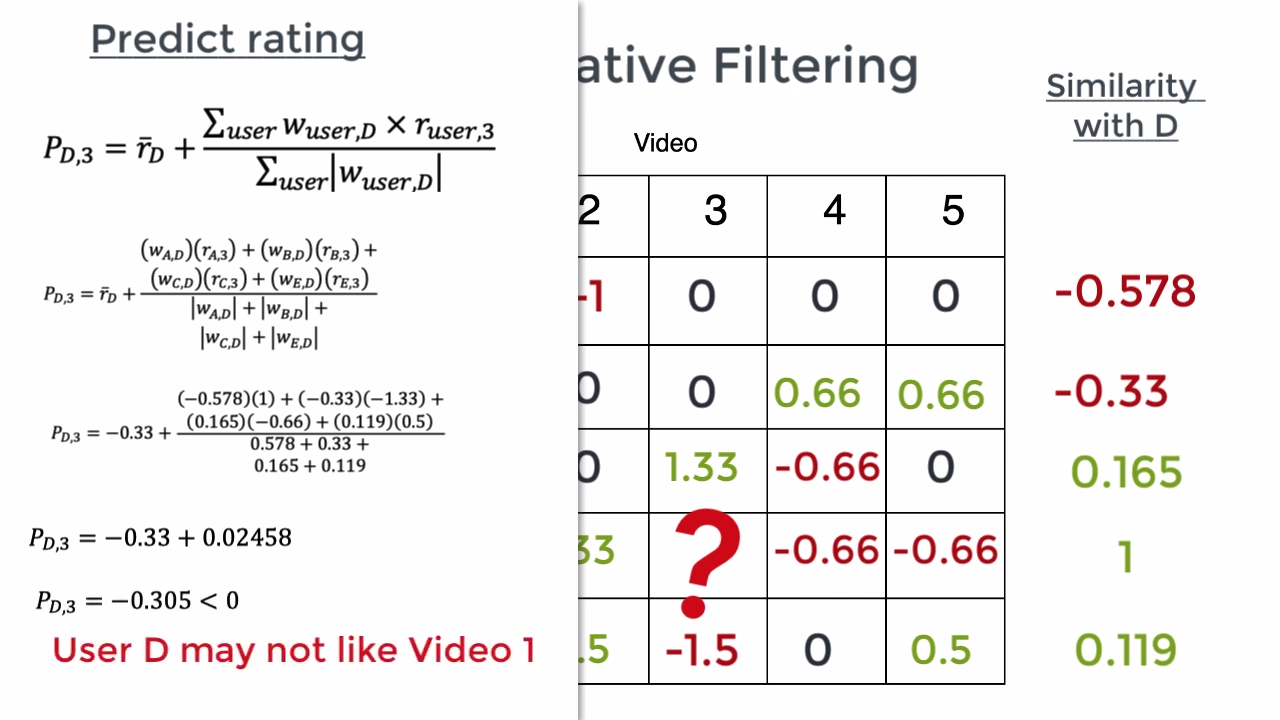
Find similar users to the active users based on intersection of watches. Pros: Greate Diversity in recommendation Con: Changing user behaviours
Item Based
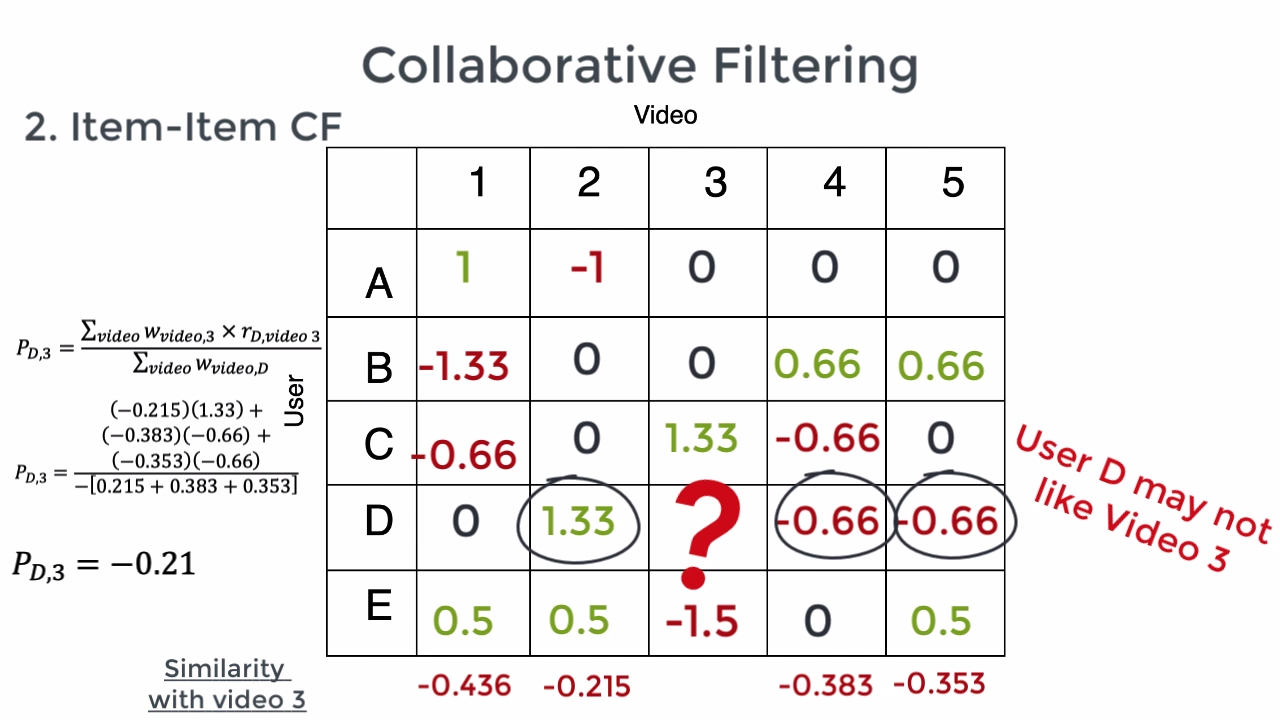
Find similar items to the active item based on intersection of watches Pros: Item similarity can be computed once; taye of increase in items < users Pros: items are easier to categorize Con: lack of diversity
Two types: Nearest Neighbor , Matrix Factorization
# Collaborative Filtering: Nearest Neighbor
# Collaborative Filtering: Matrix Factorization
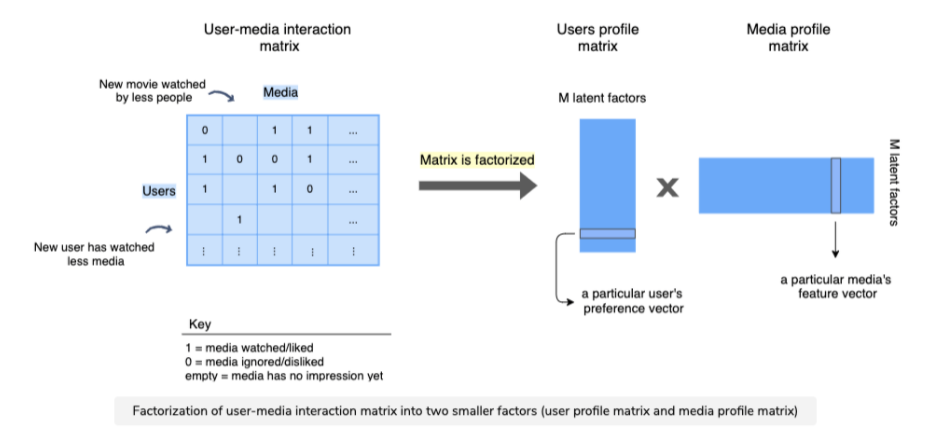
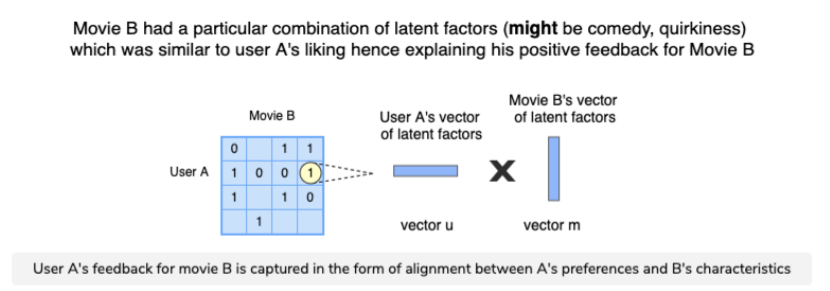
- Initialize user and movie vectors randomly
- Compute feedback for known user-movie feedback value
- Difference between actual (f_ij) and predicted feedback u_i*m_j, will be error
- Use stochastic gradient descent to update user and movie latent factors
# Other Notes
Time deacy: as time goes on , put less weight to a rating. Apply more weigh to less frequented items.
# Content Based Filtering
Use characteristics from movie metadata
Two approaches:
a) Recommend movies similar to those user have interacted in the past
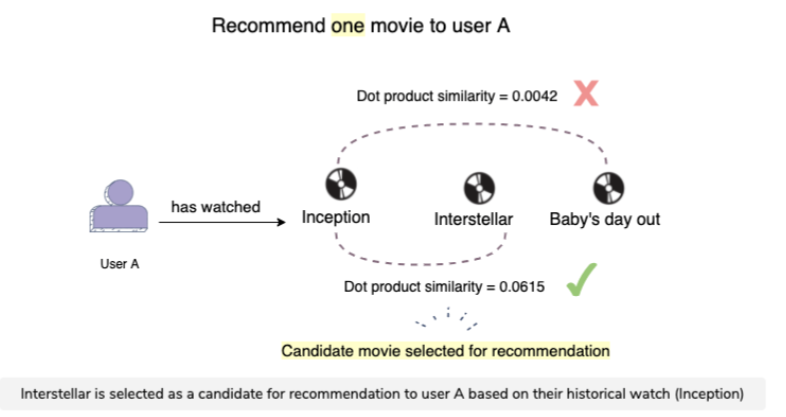
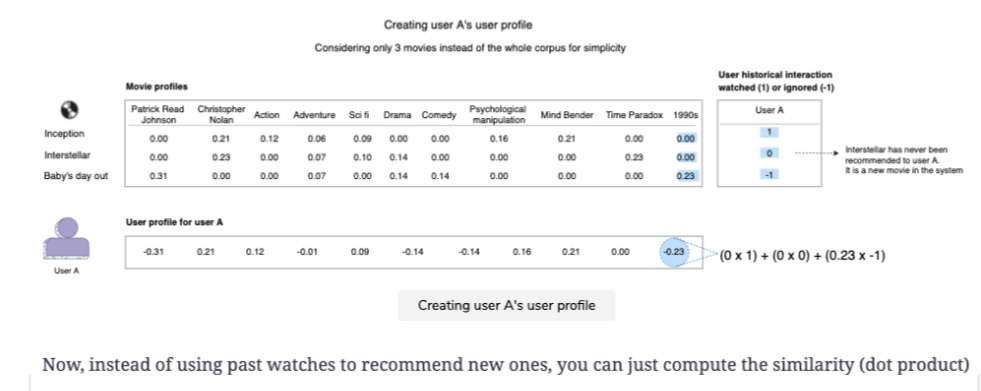
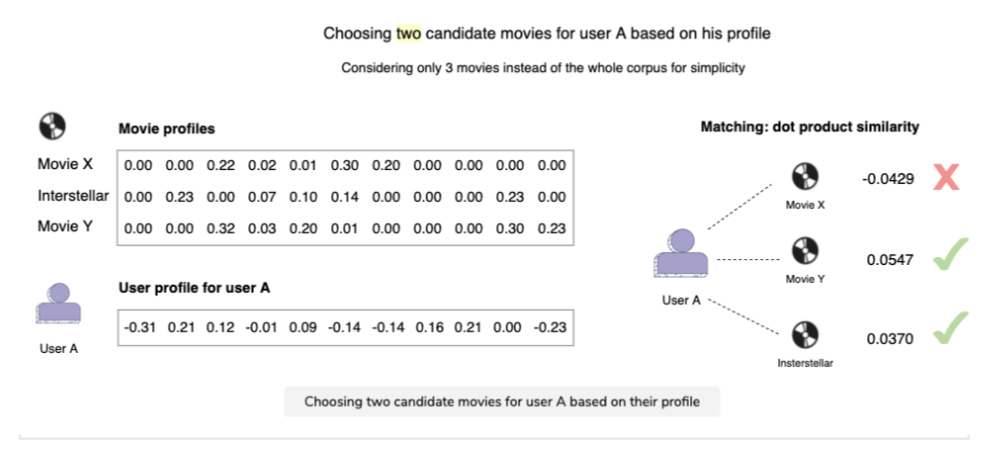
b) Build user profile from the average of media profiles; then cosine similarity
# Embeddings using Deep Learning
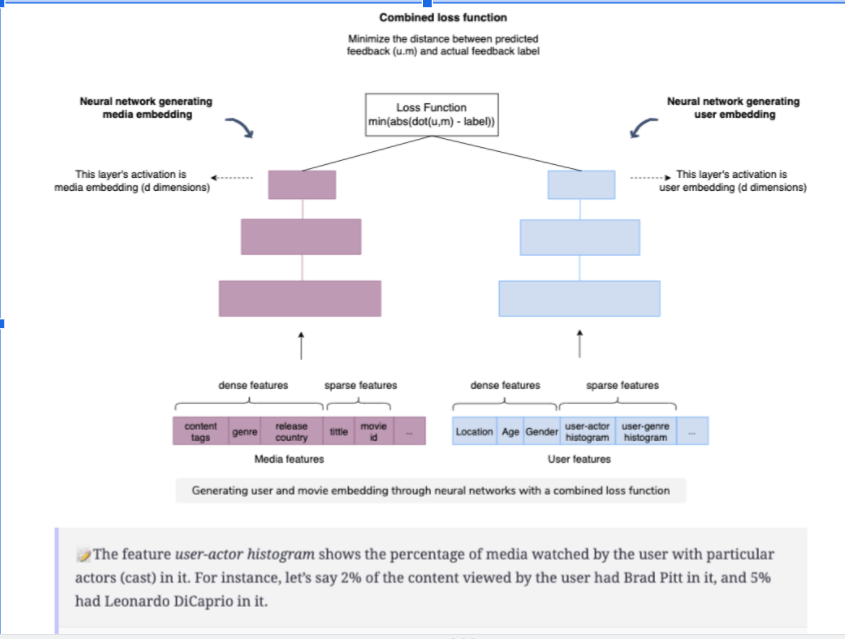
You set up the network as two towers : Tower 1: media only sparse and dense features Tower 2: user-only sparse and dense features
The activation of the first tower’s last layer will form the media’s vector embedding (m).
The activation of the second tower’s last layer will form the user’s vector embedding (u).
The combined optimization function at the top aims to minimize the distance between the dot product of u and m (predicted feedback) and the actual feedback label.
# Ranking
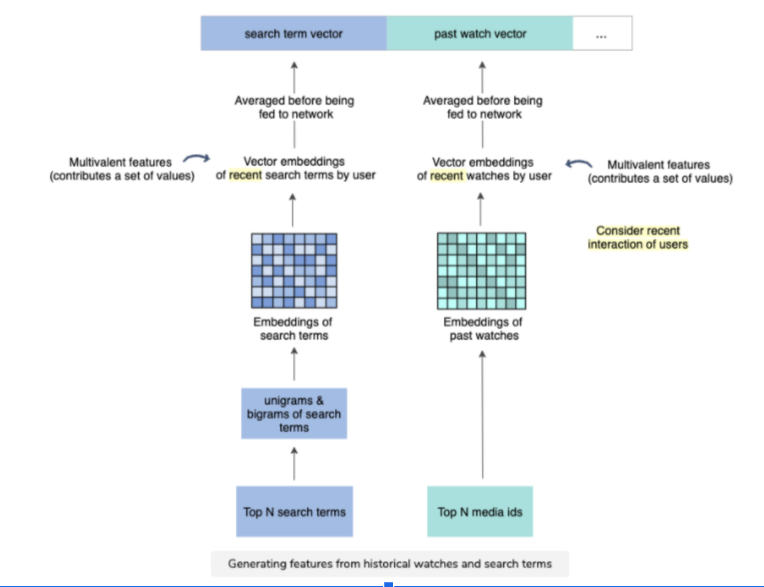
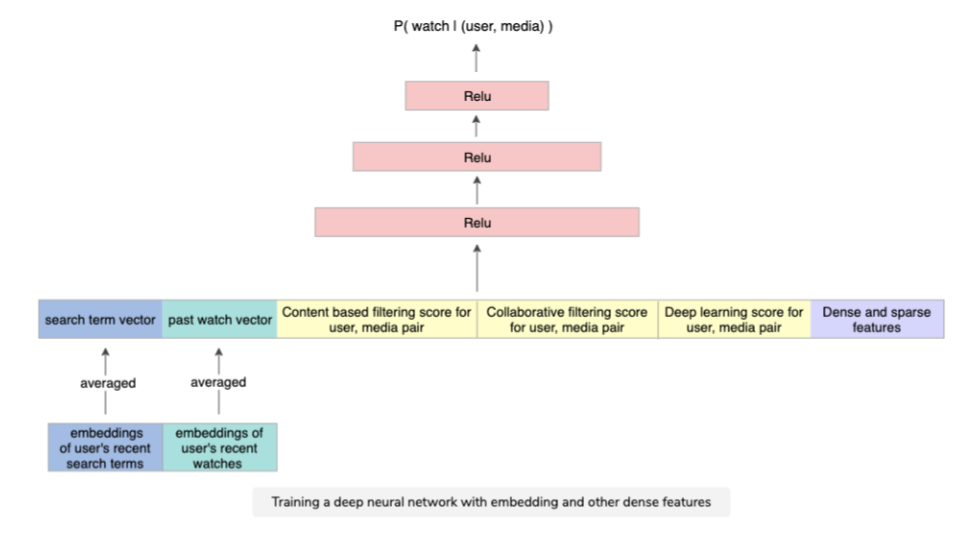
For actual predicting rating, you can use the below type of network.
# Model Comparisions
Collaborative filtering pro: does not require domain knowledge to create user and media profiles Con: cold start for user and media Con: Echo Chamber Con: Shilling Attack
Content Based Filtering Pro: cold start user can provide recommendation Pro: new media profile can be build immediately