# Lesson 7: Recurrent Neural Networks
# Lectures
# Intro to RNNs
- RNN (R ecurrent N eural N etworks)
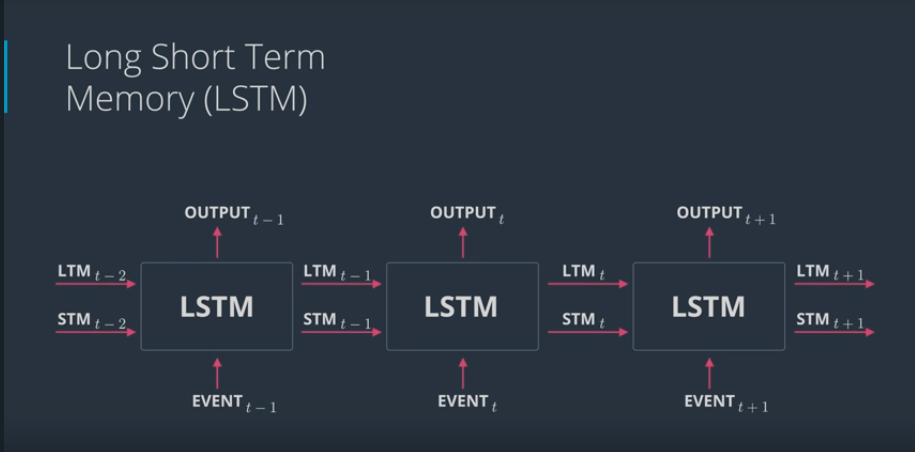
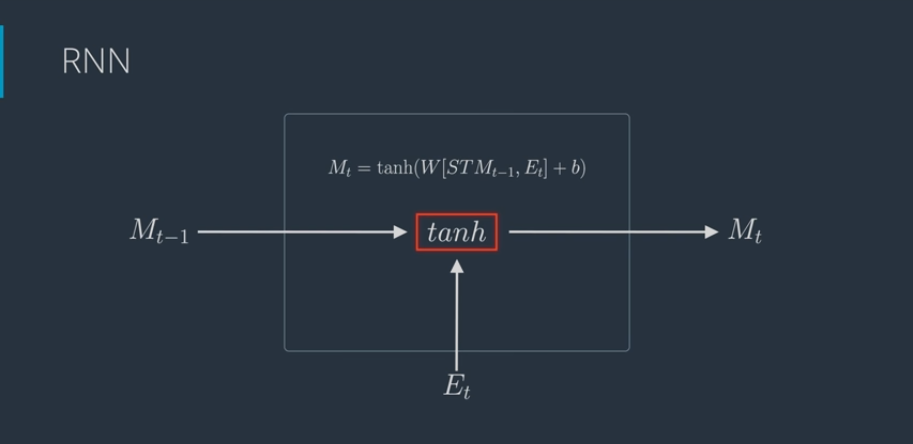
RNNs are designed specifically to learn from sequences of data by passing the hidden state from one step in the sequence to the next step in the sequence, combined with the input.
LSTM (L ong S hort - T erm M emory)
LSTM are an improvement of the RNN, and quite useful when needs to switch between remembering recent things, and things from long time ago
# RNN vs LSTM
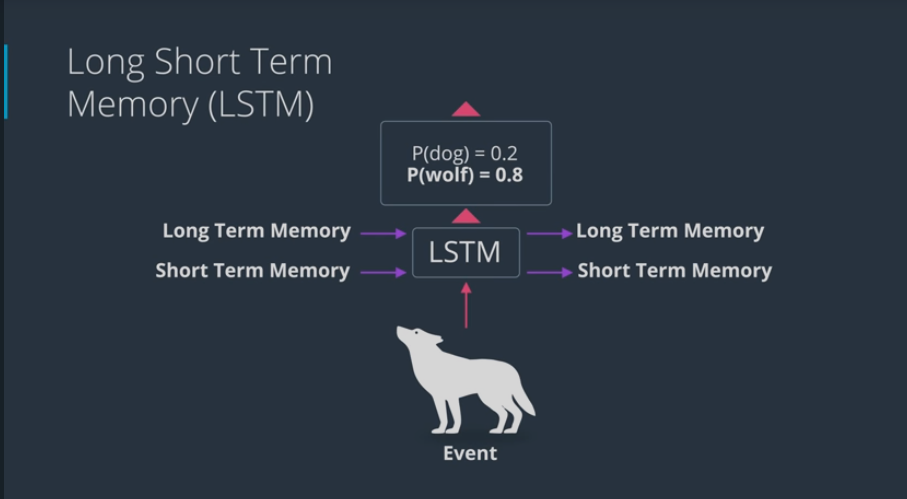
Lets say, we are trying to predict wheter the animal is a dog or a wolf.
With no context, you might say it is a dog.
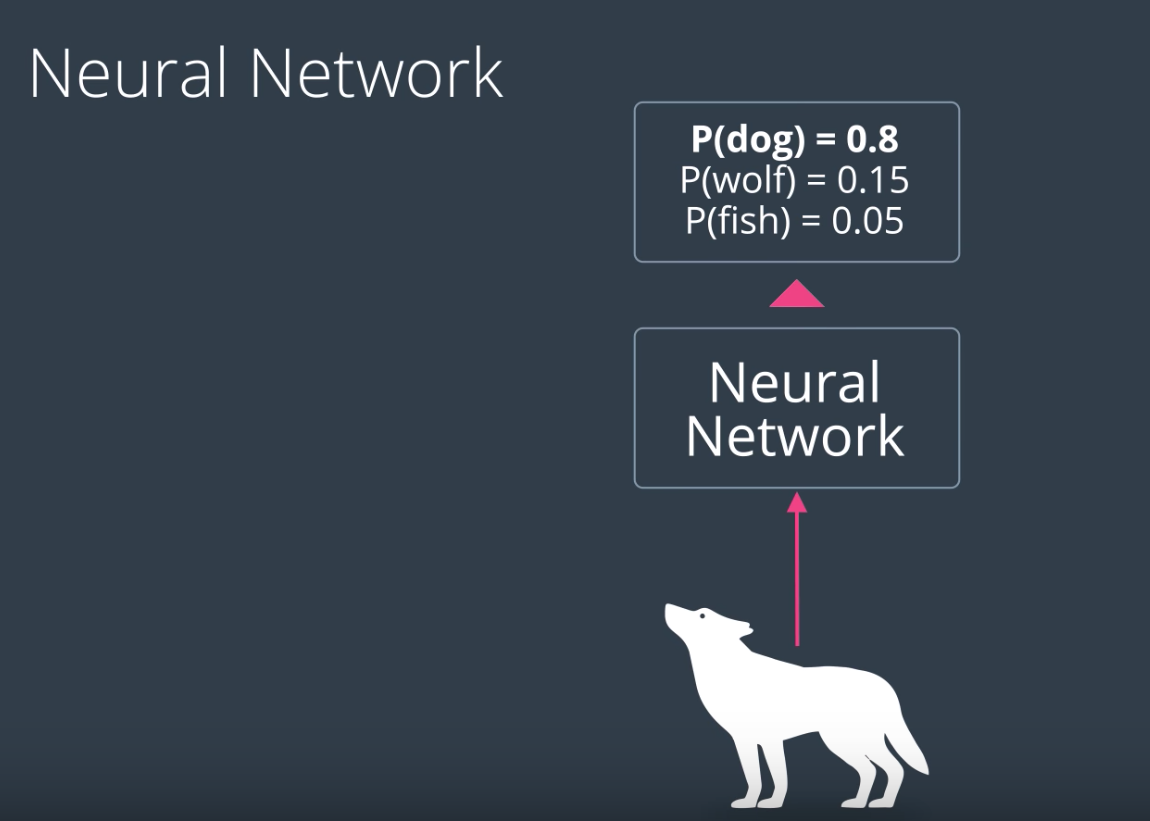
However, if you know previously mentioned animals are bear and fox, you will say dog.
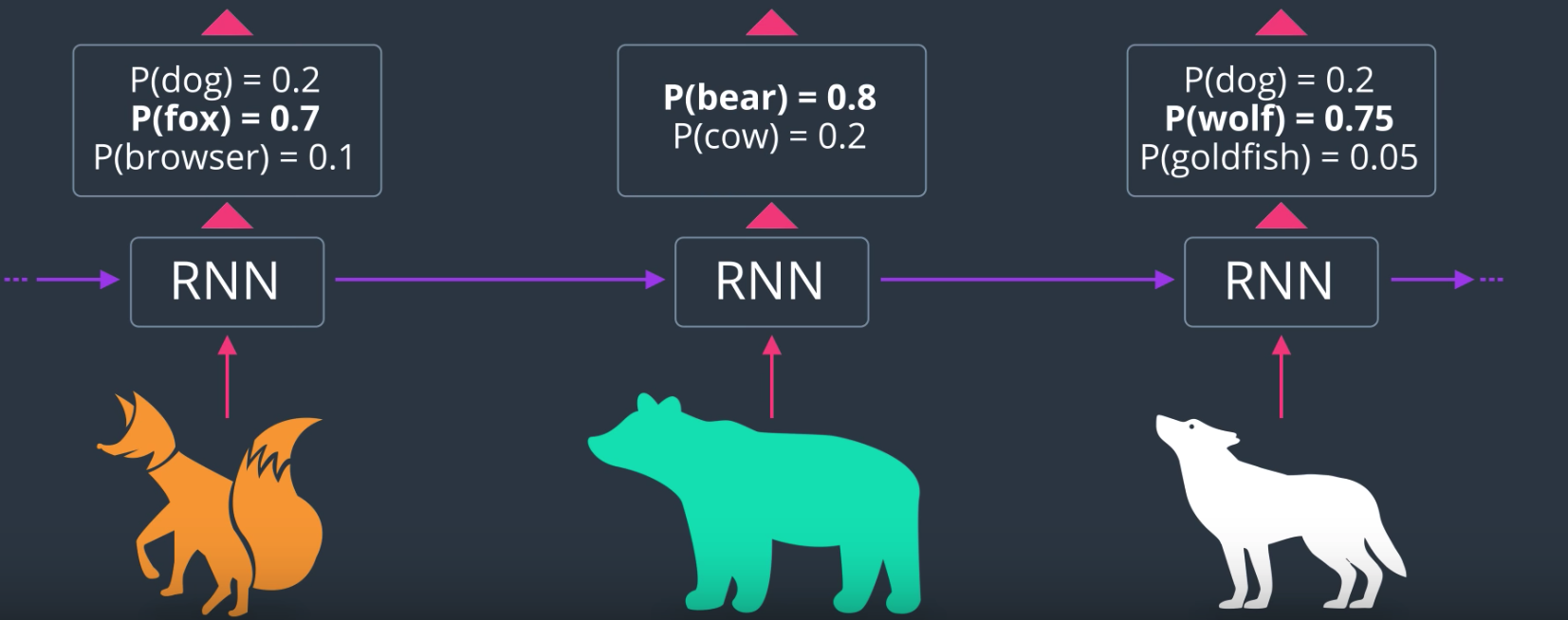
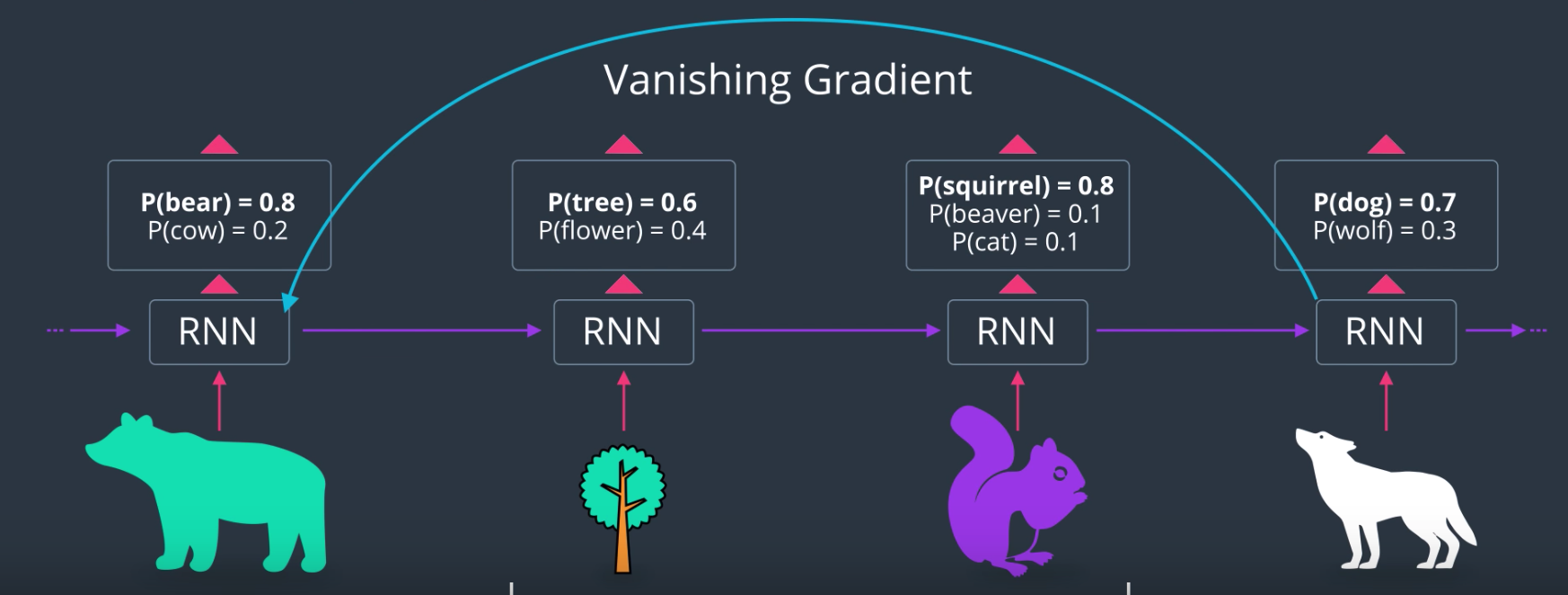
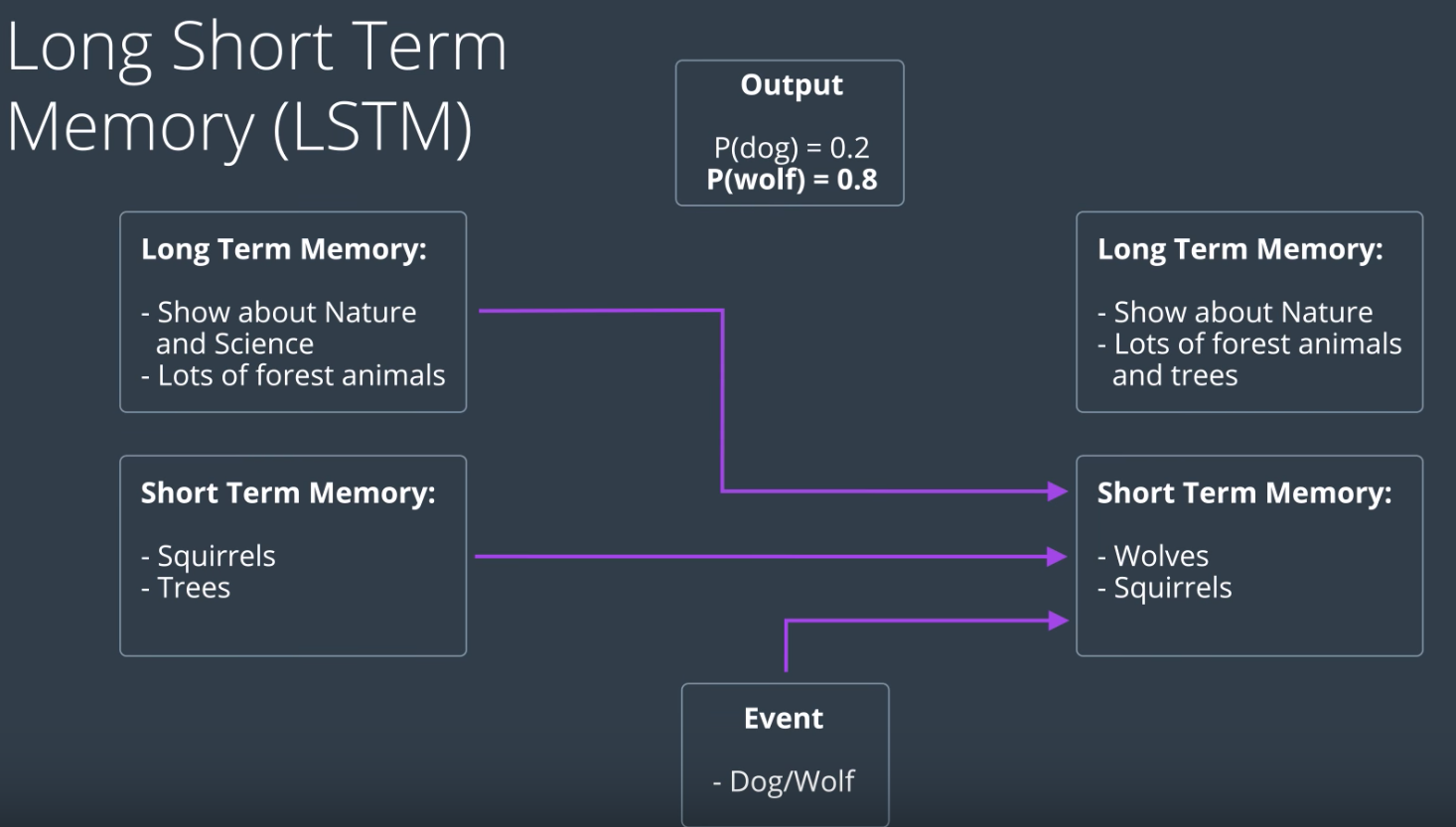
But , what if there were other animals/things mentioned. That is why you need a model that can keep track of long term events and short term events.
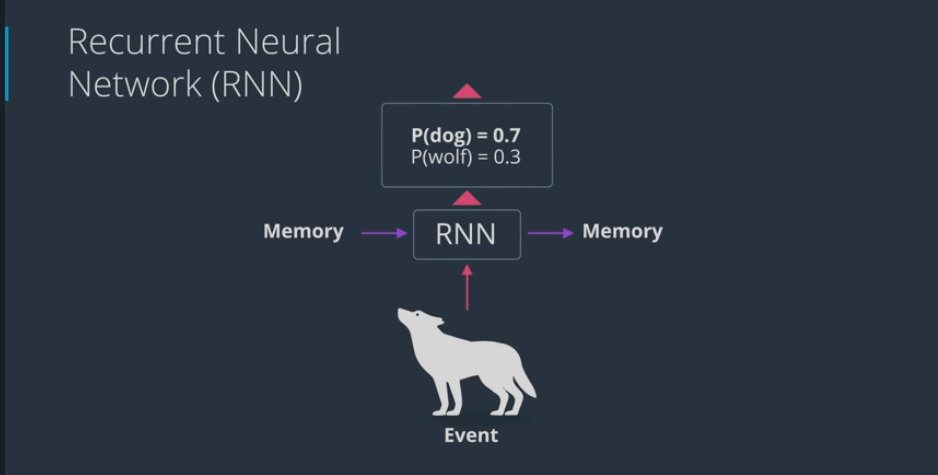
- RNN work as follows:
- memory comes in an merges with a current event
- and the output comes out as a prediction of what the input is
- as part of the input for the next iteration of the neural network
- RNN has problem with the memory that is short term memory
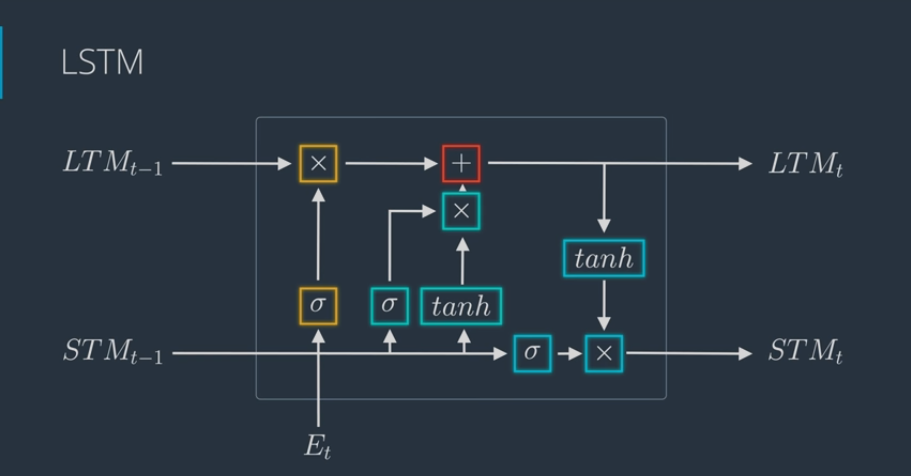
- LSTM works as follows:
- keeps track long term memory which comes in an comes out
- and short term memory which also comes in and comes out
- From there, we get a new long term memory, short term memory and a prediction. In here, we protect old information more.
# Basics of LSTM
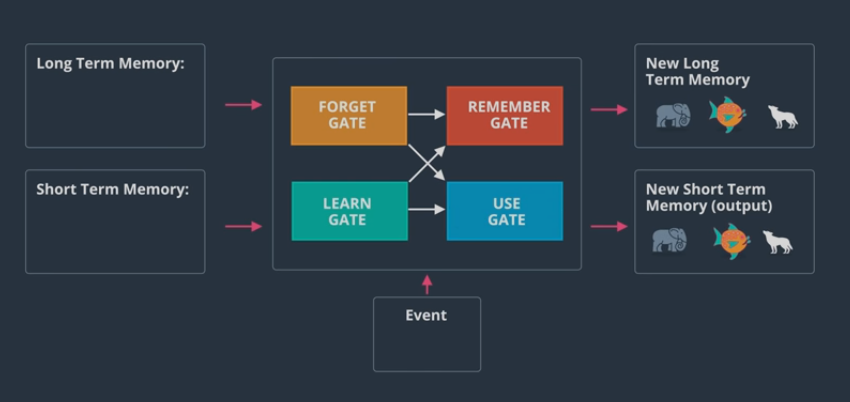
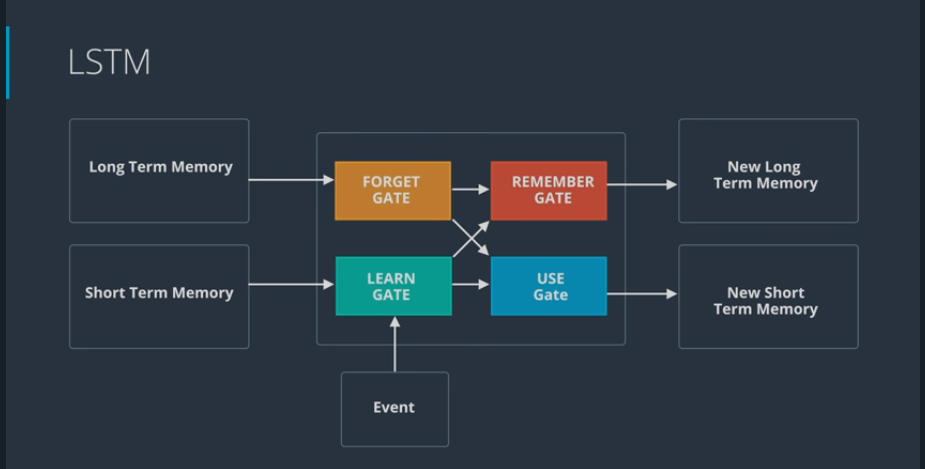
- Architecture of LSTM forget gate :
long term memory (LTM) goes here where it forgets everything that it doesn't consider useful
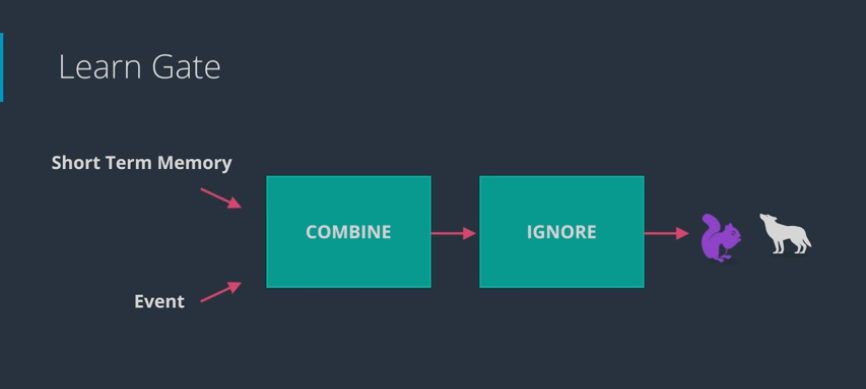
learn gate: short term memory and event are joined together containing information that have recently learned and it removes any unecessary information
remember gate: long term memory that haven't forgotten yet plus the new information that have learned get joined together to update long term memmory
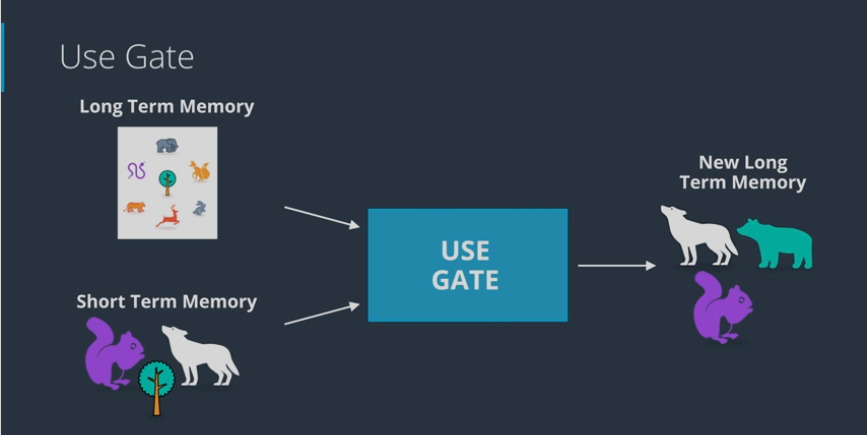
use gate:
decide what information use from what previously know plus what we just learned to make a prediction. The output becomes both the prediction and the new short term memory (STM)
# Architecture of LSTM
- RNN Architecture
- LSTM Architecture
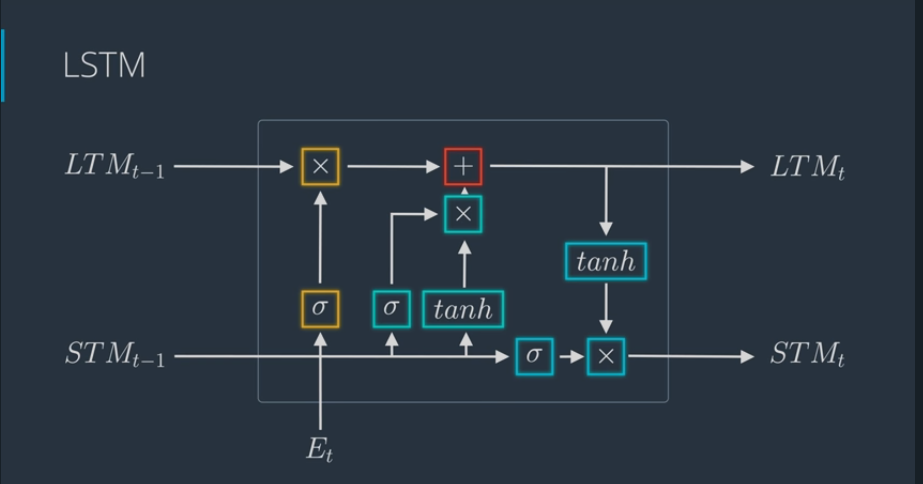
# The Learn Gate
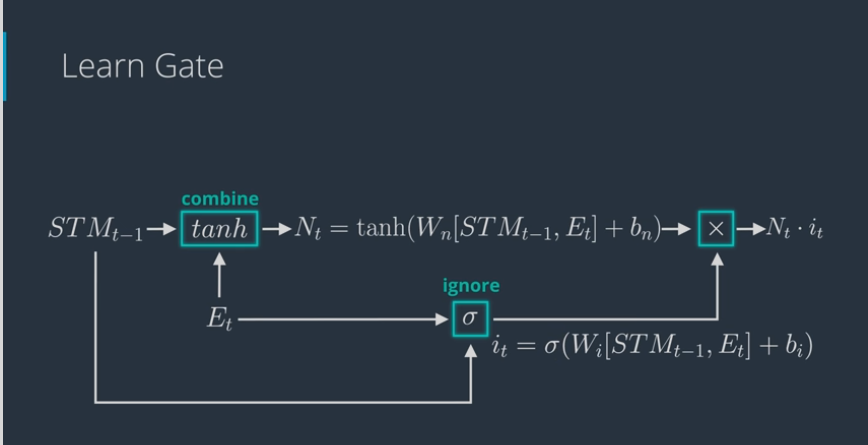
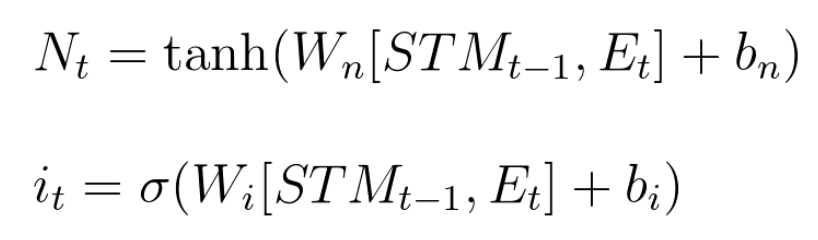
- Learn gate works as follows:
- Take STM and the event and joins it (use tanh activation function)
- then ignore (ignore factor) a bit to keep the important part of it (use sigmoid activation function)
# The Forget Gate
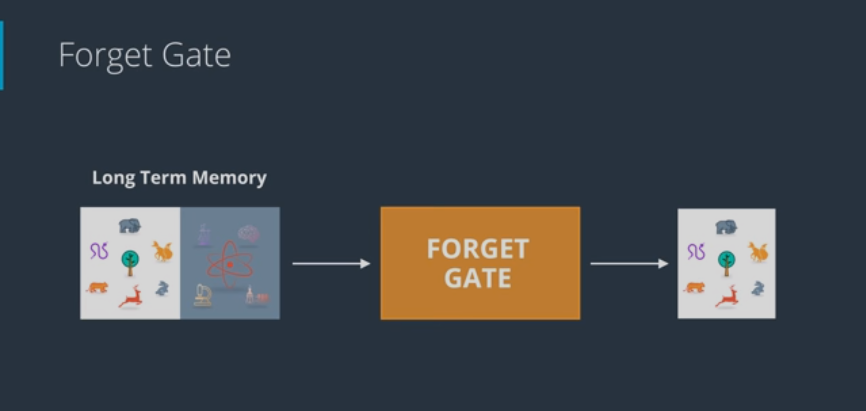
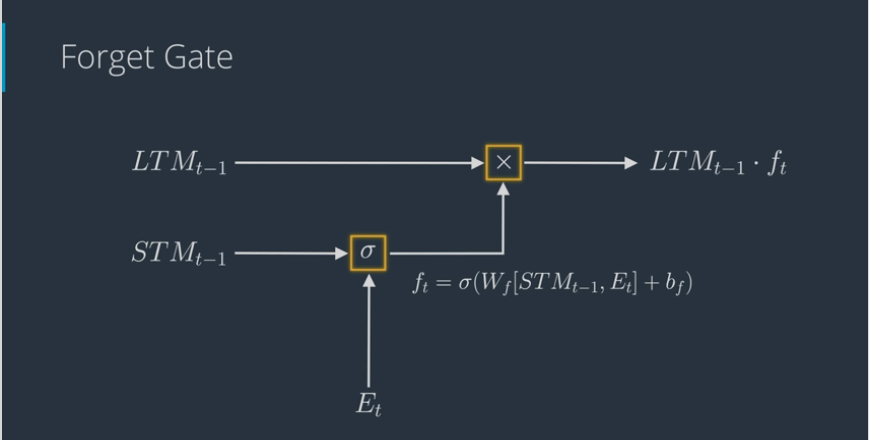
- Forget gate works as follows:
- Take LTM and decides what parts to keep and to forget (forget factor, use sigmoid activation function)
In the below image, we forget the science context and only remeber the nature context.

# The Remember Gate
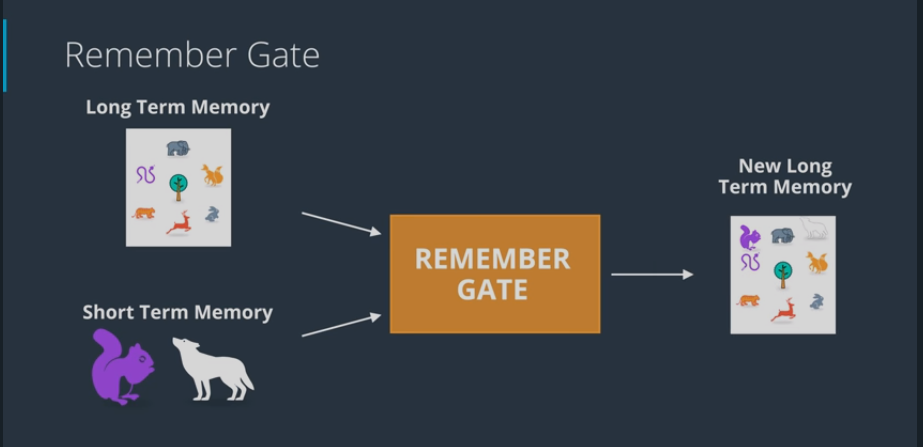
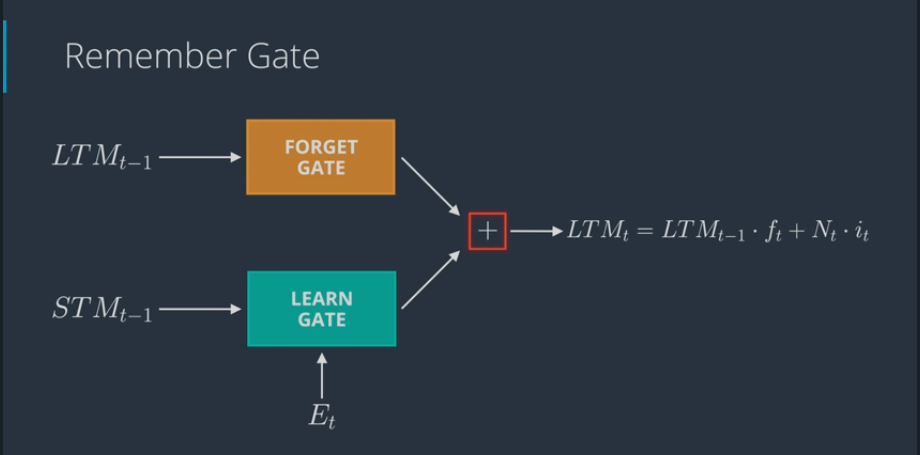
- Remember gate works as follows:
- Take LTM coming out of forget gate and STM coming out of learn gate and combine them together

# The Use Gate
- Remember gate works as follows:
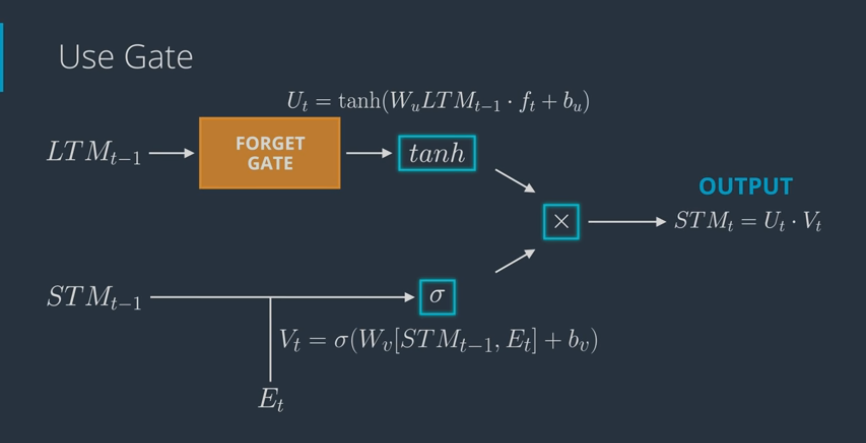
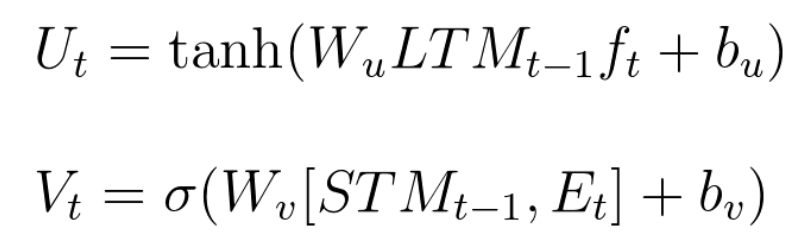
- Take LTM coming out of forget gate (apply tanh) and STM coming out of learn gate (apply sigmoid) to come up with a new STM and an output (multiply them together)
# Putting it All Together
# Other architectures
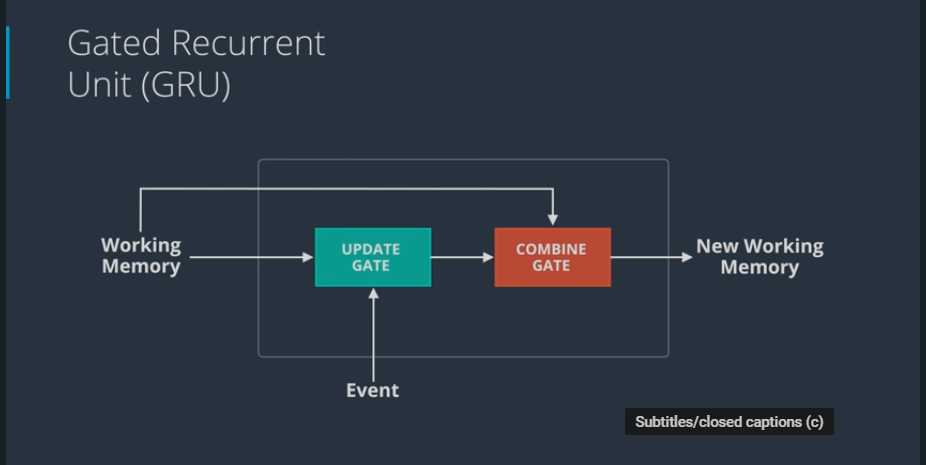
Gated Recurrent Unit (GRU):
- combine forget and learn gate into an update gate
- run this through a combine gate
- only returns one working memory
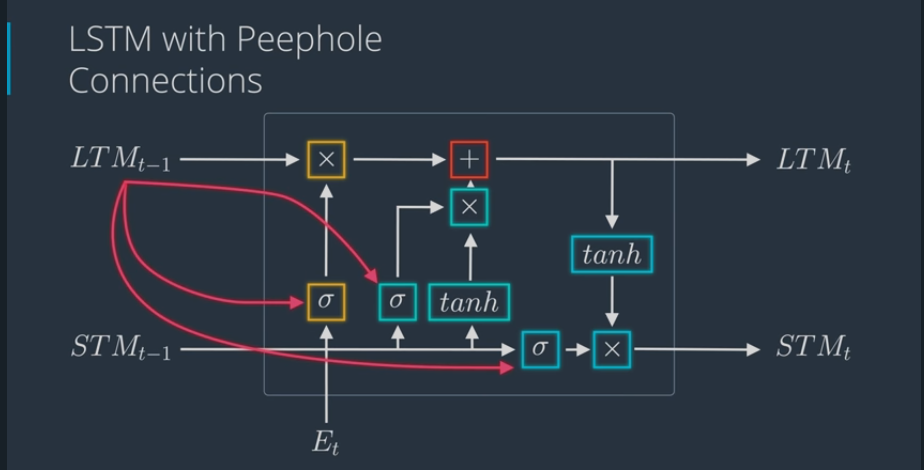
- Peephole Connections
- forget gate which also connect LTM into neural network that calculates forget factor
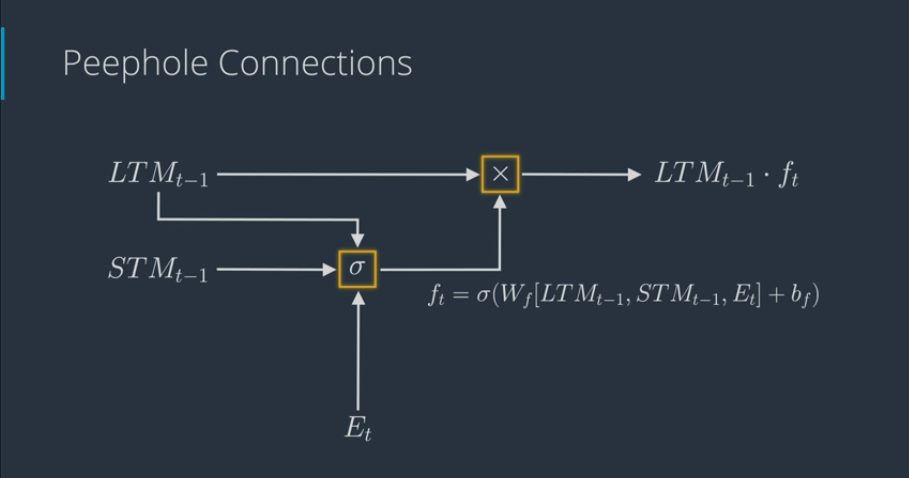
- LSTM with Peephole Connection
- do peephole connection for every one of forget-type nodes
# Character-wise RNNs
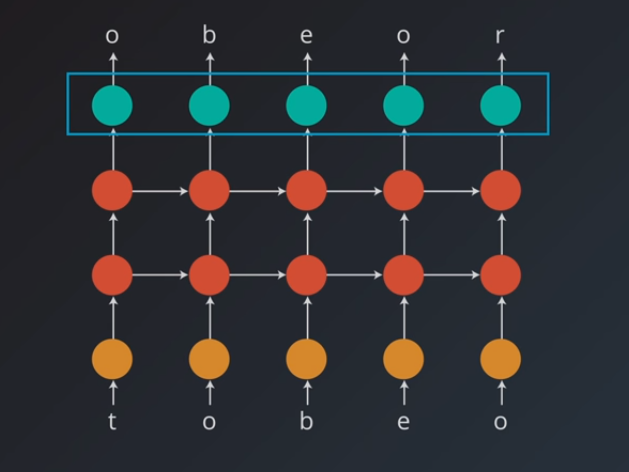
- Network will learn about some text, one character at a time and then generate new text one character at a time
- The architecture is as follows:
- input layer will pass the characters as one hot encoded vectors
- these vectors go to the hidden layer which built with LSTM cells
- the output layer is used to predict to the next character (using softmax activation)
- use cross entropy loss for training with gradient descent
# Sequence Batching
- Use matrix operations to make training mor efficient
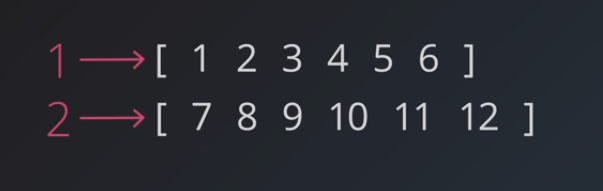
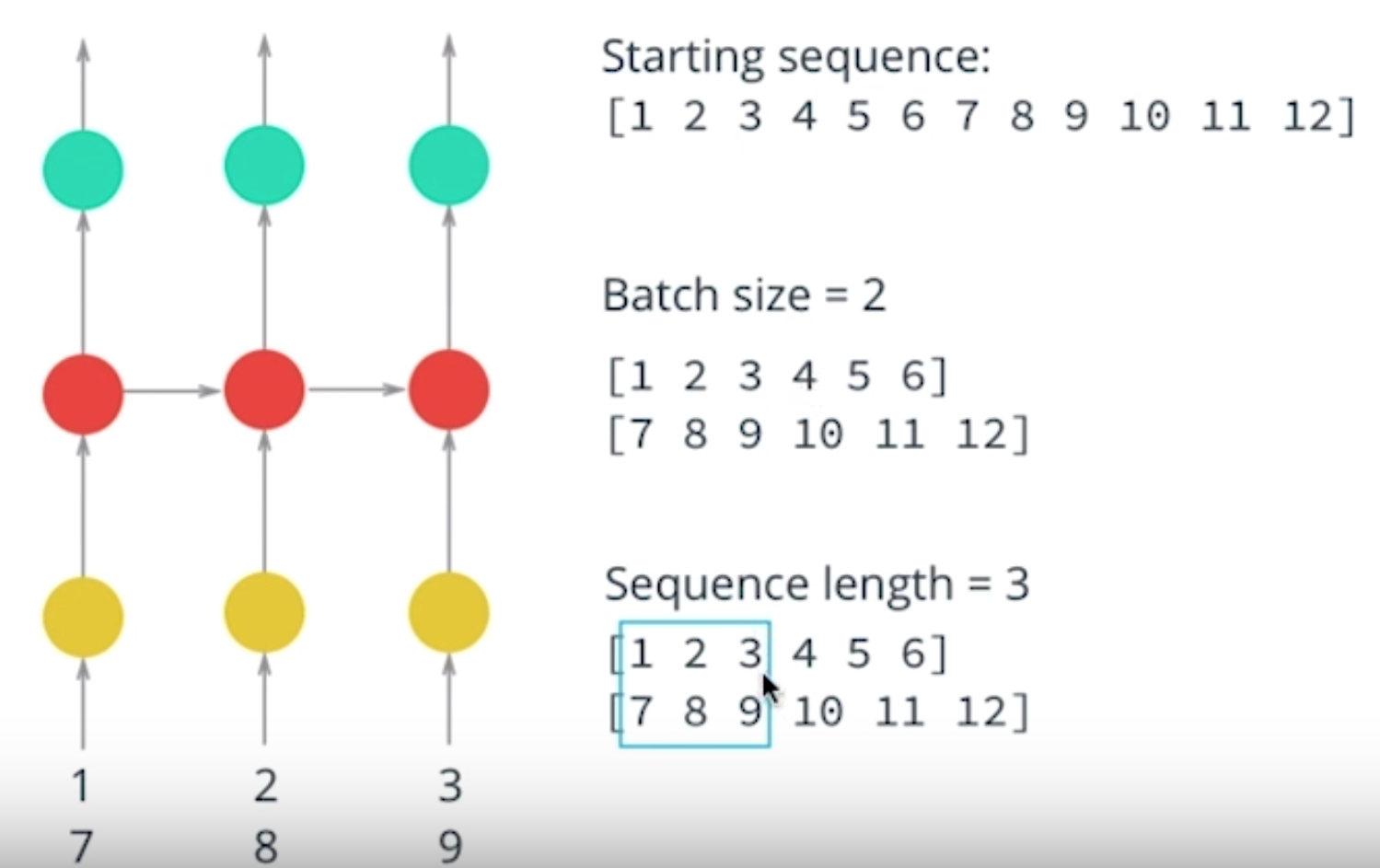
- RNN training multiple sequence in parallel, for example:
- sequence of numbers from 1 to 12
- split it in half and pass in two sequences
- batch size corresponds to the number of sequences we're using, here we'd say the batch size is 2
- we can retain hidden state from one batch and use it at the start of the next batch
# Quizes
# Q1 - Training & Memory
- Q: Say you've defined a GRU layer with
input_size = 100,hidden_size = 20, andnum_layers=1. What will the dimensions of the hidden state be if you're passing in data, batch first, in batches of 3 sequences at a time? - A:
(1, 3, 20) - E: The hidden state should have dimensions:
(num_layers, batch_size, hidden_dim).